

Articles
History of Replica Rolex Watches: From Fakes to Super Clones (2026 Update)
May
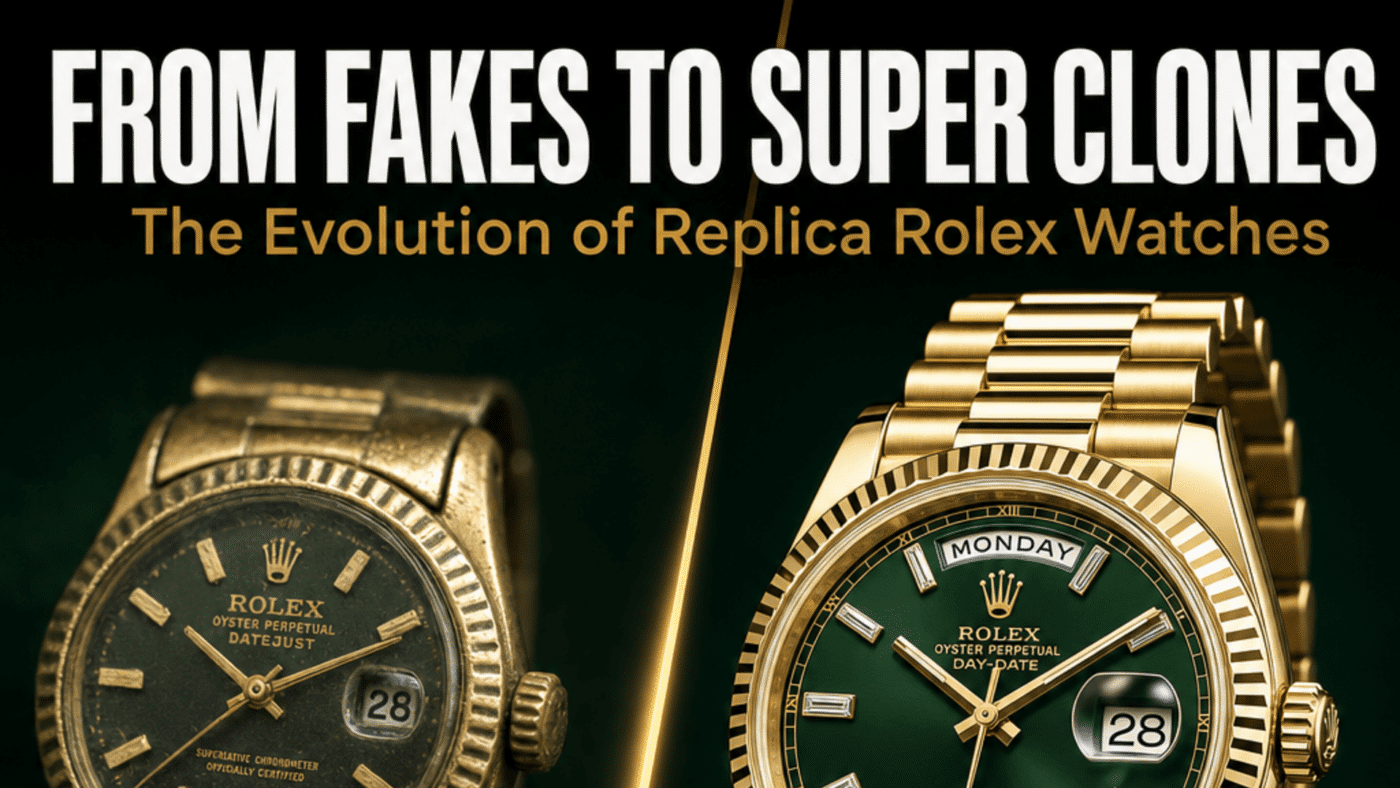
Something fascinating happens when you hold a 2026 super clone Rolex next to the genuine article. Even collectors who have spent decades around watches pause. The weight is right. The dial printing is sharp. The bezel clicks with the same confident precision. Twenty years ago, spotting a fake Rolex took a passing glance. Today, it takes a loupe, a trained eye, and sometimes opening the caseback. The authorized vs. replica Rolex debate has shifted dramatically, and understanding how we got here means tracing nearly a century of imitation, innovation, and outright ingenuity.
The history of replica Rolex watches reads like an underground technology timeline. Counterfeit watches number roughly 40 million units annually worldwide, and Rolex remains the most counterfeited brand on the planet. What started in the 1930s as shoddy brass knockoffs sold in back alleys has evolved into a sophisticated global industry producing super clone Rolex watches that can cost $600 to $1,200 and fool experienced dealers. The evolution of Rolex designs and the parallel evolution of its replicas tell two intertwined stories, and this article covers both from the beginning.
Whether you are a seasoned collector tracking the latest factory output from VSF and Clean Factory, or a newcomer weighing your first purchase, the full history of replica Rolex watches matters. It explains why today’s market looks the way it does, why prices for both genuine and replica Rolexes keep climbing, and what “super clone” actually means in 2026.
The History of Rolex and the Birth of Replicas
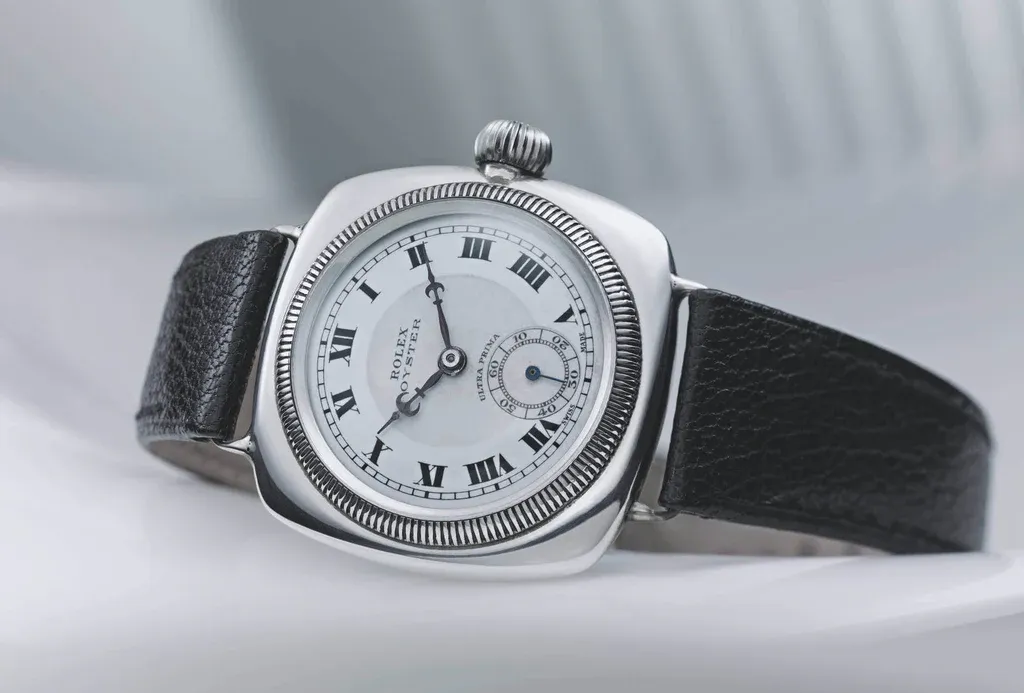
In 1905, a 24-year-old German-born entrepreneur named Hans Wilsdorf founded what would become the most recognized watch brand on earth. Originally operating out of London as Wilsdorf & Davis, the company rebranded to Rolex in 1908, and Rolex’s official history traces a century of continuous innovation that made the brand the world’s most valuable watch name. Wilsdorf’s radical idea: reliable, precise wristwatches at a time when pocket watches still dominated. The 1926 Oyster case changed everything. It was the first commercially successful waterproof wristwatch case, and its distinctive hermetically sealed design became an instant visual icon. You could recognize a Rolex from across a room.
That recognizability came with a price. By the early 1930s, as Rolex cemented its reputation through precision awards and high-profile endorsements, the first counterfeits appeared. These early fakes were crude by any standard. Manufacturers used cheap brass instead of steel or gold. Engravings were sloppy. Movements rattled. A trained jeweler could spot one from ten feet away. But the buyers weren’t trained jewelers. They were working-class people who admired the Rolex crown and wanted it on their wrist without spending a year’s salary.
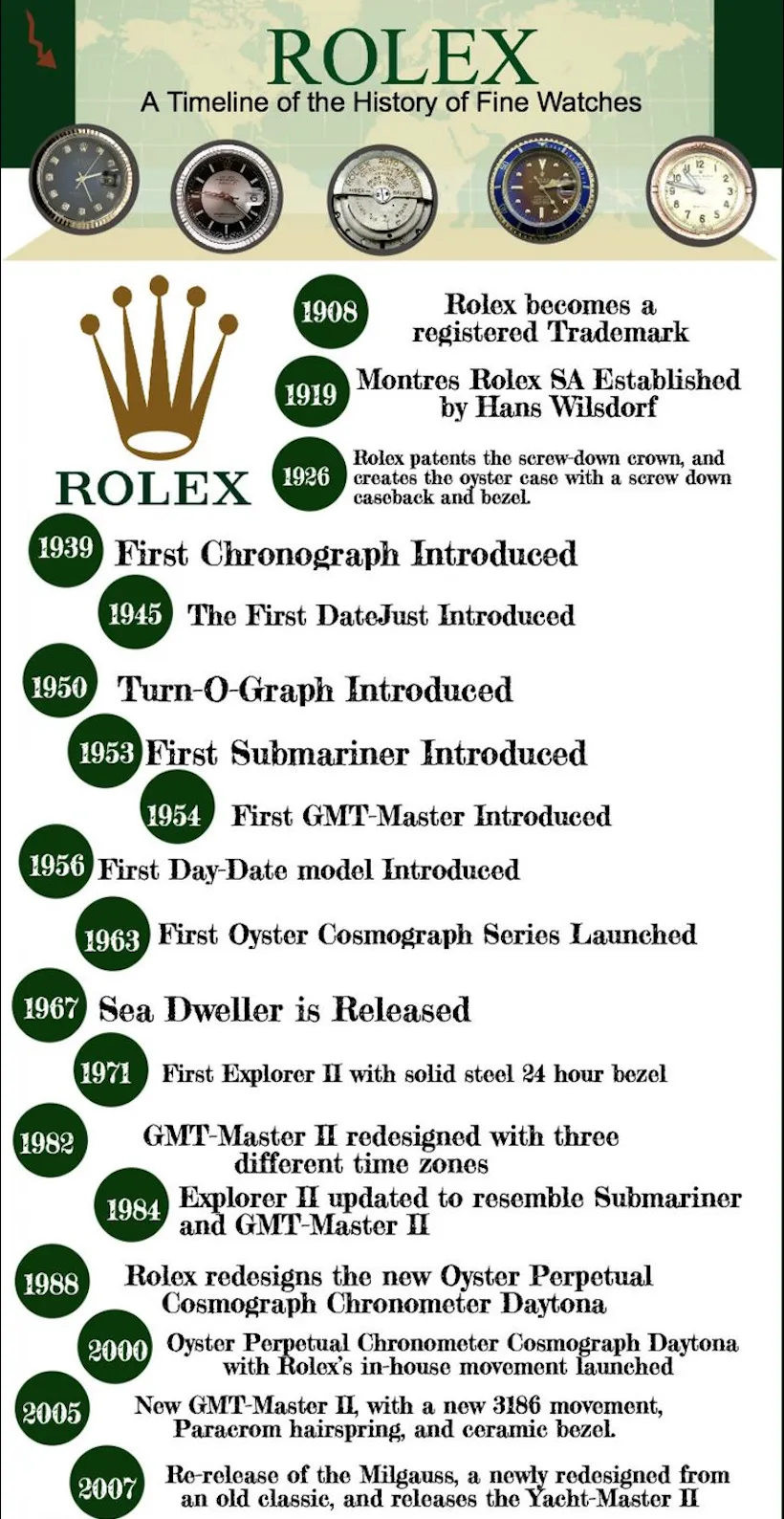
Rolex fought back with serial numbers stamped deep into the case between the lugs. Genuine Rolex serials caught light at an angle, cut with diamond-sharp precision. Early counterfeiters either skipped serial numbers entirely or stamped them so shallowly you could barely feel the indent. U.S. Customs seized thousands of these early fakes every year, a pattern that would continue for decades.
Something most people overlook: Rolex’s own anti-counterfeiting efforts have functioned as a kind of R&D roadmap for replica factories. Every security feature Rolex introduced, from hologram stickers in the 1980s to the laser-etched coronet on the crystal in 2002, eventually got reverse-engineered. The Federation of the Swiss Watch Industry has estimated that roughly 1.6 million fake Rolexes enter the global market each year, and that figure only counts known seizures and estimates. The real number could be substantially higher.
There is a co-evolutionary pattern at work here that biologists would recognize. Rolex and its counterfeiters operate like predator and prey in an evolutionary arms race. Each time Rolex develops a new defense, the counterfeiters adapt. Rolex introduced the Oyster case; counterfeiters learned to imitate the fluted bezel. Rolex added hologram stickers; counterfeiters produced convincing fakes within three years. Rolex etched a microscopic crown on the sapphire crystal; super clone factories now include that etching as standard. The gap narrows each generation, and Rolex is forced to innovate again. By 2026, the remaining differences between genuine and super clone have been pushed to the molecular level: proprietary steel alloys, movement architecture invisible without disassembly, and digital authentication systems that Rolex may be developing for future models.
The Rise of Replica Rolex Watches in the 20th Century
The 1970s and the Quartz Crisis
The 1970s hit the Swiss watch industry like a freight train. Cheap, accurate quartz watches from Japan flooded the market, and dozens of Swiss brands folded or merged. Rolex, characteristically stubborn, doubled down on mechanical movements and luxury positioning. The spread between a genuine Rolex and an everyday watch grew wider than ever, and counterfeiters noticed.
During this era, replica makers began upgrading from obvious brass to better alloys. More significantly, they embraced quartz movements en masse. Quartz was cheap, reliable, and easy to source. It also bypassed the single hardest thing to fake about a Rolex: the smooth, sweeping seconds hand of an automatic movement. A ticking seconds hand became the instant giveaway of a 1970s or 1980s fake, but plenty of casual buyers never thought to look.
The Quartz Crisis had an ironic side effect for the replica industry. As Swiss brands pivoted to quartz themselves, counterfeiters found cover. If a genuine Swiss watch could tick, why not a “Rolex”? The lines blurred just enough for replica sellers to push volume with fewer questions asked.
Canal Street and the Global Geography of Fakes (1980s–1990s)
If there was a capital of the counterfeit Rolex world in the 1980s and 1990s, it was Canal Street in lower Manhattan. Vendors set up folding tables piled with fake watches, designer bags, and sunglasses. Tourists browsing the stalls could pick up a “Rolex” for twenty bucks, complete with a green hang tag and a fuzzy hologram sticker on the caseback. Organized gangs, including groups like Born to Kill, controlled much of the distribution pipeline, importing container loads of counterfeit goods from Asian factories.
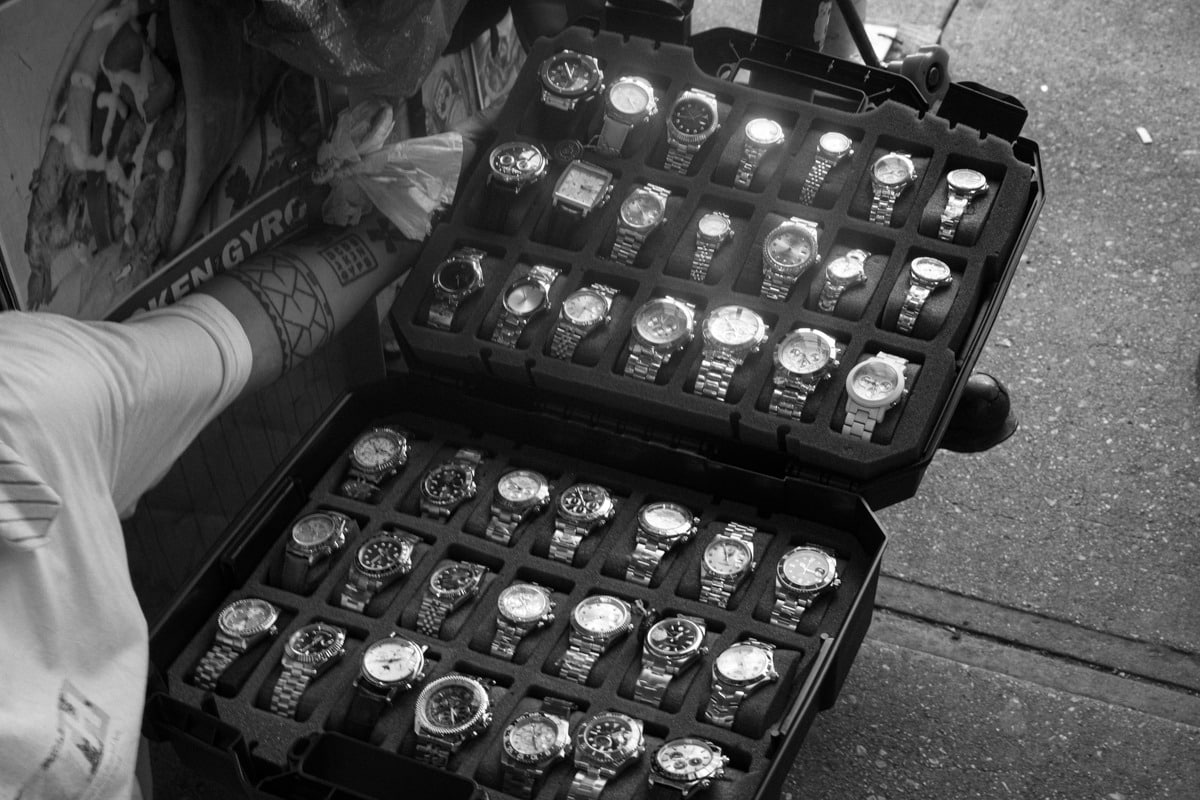
But Canal Street was never alone. Bangkok’s Patpong Night Market operated with similar brazenness, offering fake Rolexes alongside counterfeit designer goods with virtually no enforcement pressure through the 1990s. Istanbul’s Grand Bazaar had dealers who kept the “good fakes” in back rooms, brought out only for customers who knew to ask. Hong Kong’s Temple Street Night Market ran an entire ecosystem of graded replicas where a knowledgeable buyer could negotiate price based on quality tier. The counterfeit watch trade was never a New York phenomenon. It was global, decentralized, and culturally embedded in tourist economies on every continent.
The manufacturing hub shifted firmly to Asia. Factories in China, Hong Kong, and parts of Southeast Asia produced counterfeit components at massive scale, shipping them to hubs in New York, London, and Dubai. Industry estimates suggest that as many as 23.3 million counterfeit watches entered the United States during peak years in the 1990s, a figure that exceeded the total number of genuine watches Rolex produced globally over the same period.
These Canal Street-era replicas could fool a casual buyer at a glance. The gold plating looked passable. The dials had the right general layout. But get one under a magnifying glass and the flaws jumped out: uneven lume application, smeared dial text, misaligned bezels, and that persistent ticking quartz movement. For anyone who wants to dig deeper, the guide to spotting a fake Rolex breaks down the specific tells that separated 1990s fakes from the real deal.
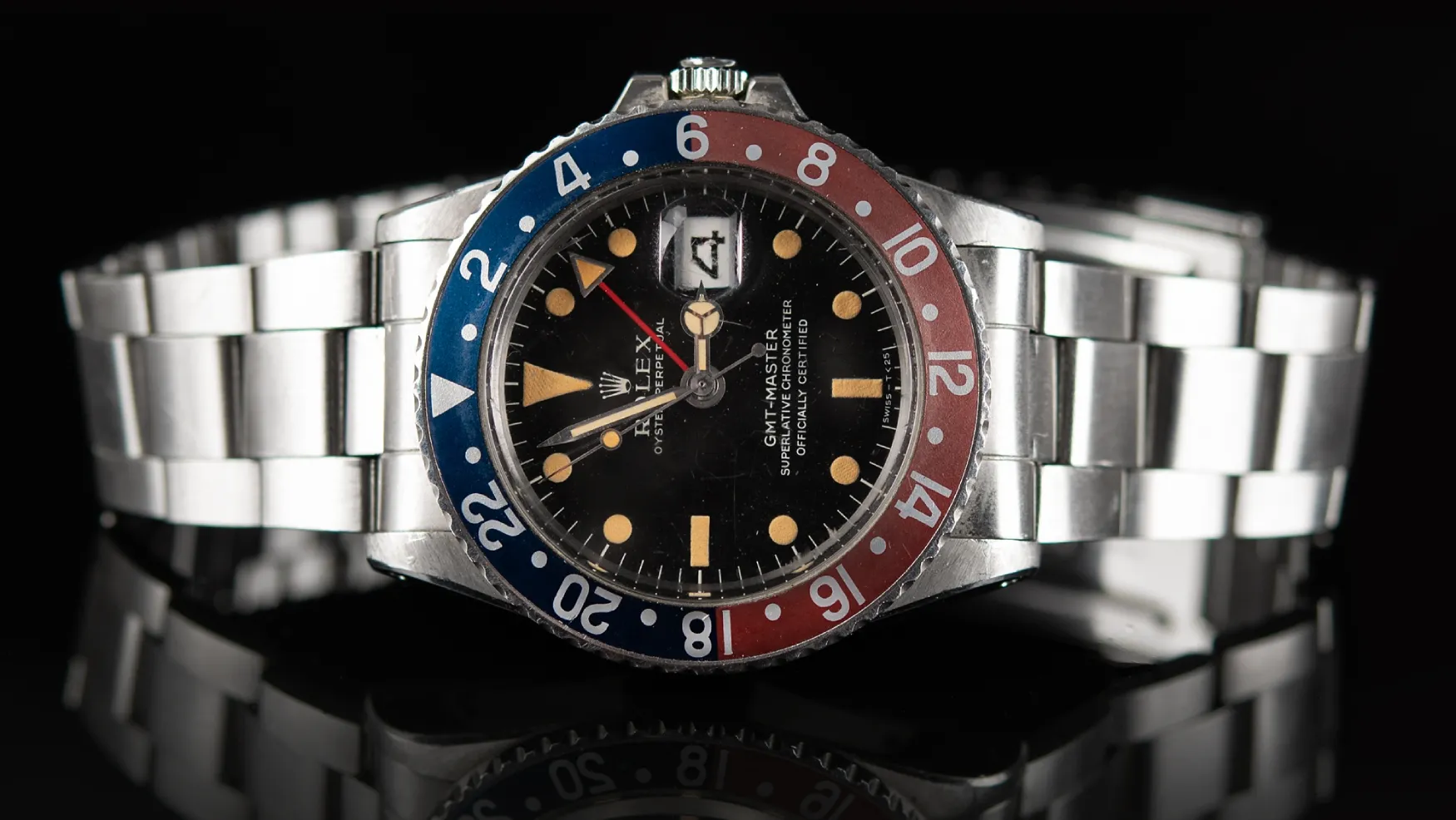
The 1980s also marked Rolex’s introduction of hologram-encoded green stickers on casebacks, featuring a three-dimensional crown logo that shifted under changing light. For a time, this was a reliable authenticity check. Counterfeit holograms tended to look flat, with static printed patterns. But within a few years, replica factories caught up, producing holograms that looked convincing enough to pass a quick inspection. It was a pattern that would repeat itself constantly: Rolex builds a better wall, and the counterfeiters find a taller ladder.
From Cheap Fakes to High-Quality Replicas: The 2000s
The 2000s changed everything. The internet shifted replica watch sales from street corners to online forums, email lists, and eventually dedicated websites. Enforcement became a game of whack-a-mole. Customs agents could seize shipping containers, but they could not stop a digital storefront operating from a server in a country with loose intellectual property laws. eBay became a major channel, with sellers listing replicas under ambiguous descriptions like “Rolex-style” or “homage watch.”
Quality took a quantum leap during this decade. Replica factories began using sapphire crystals instead of mineral glass. They introduced ceramic bezel inserts that mimicked the feel and scratch resistance of genuine Rolex ceramics. Some even attempted cloned movements based on the Rolex 3135 caliber, though early versions were unreliable and easy to identify once you opened the case.
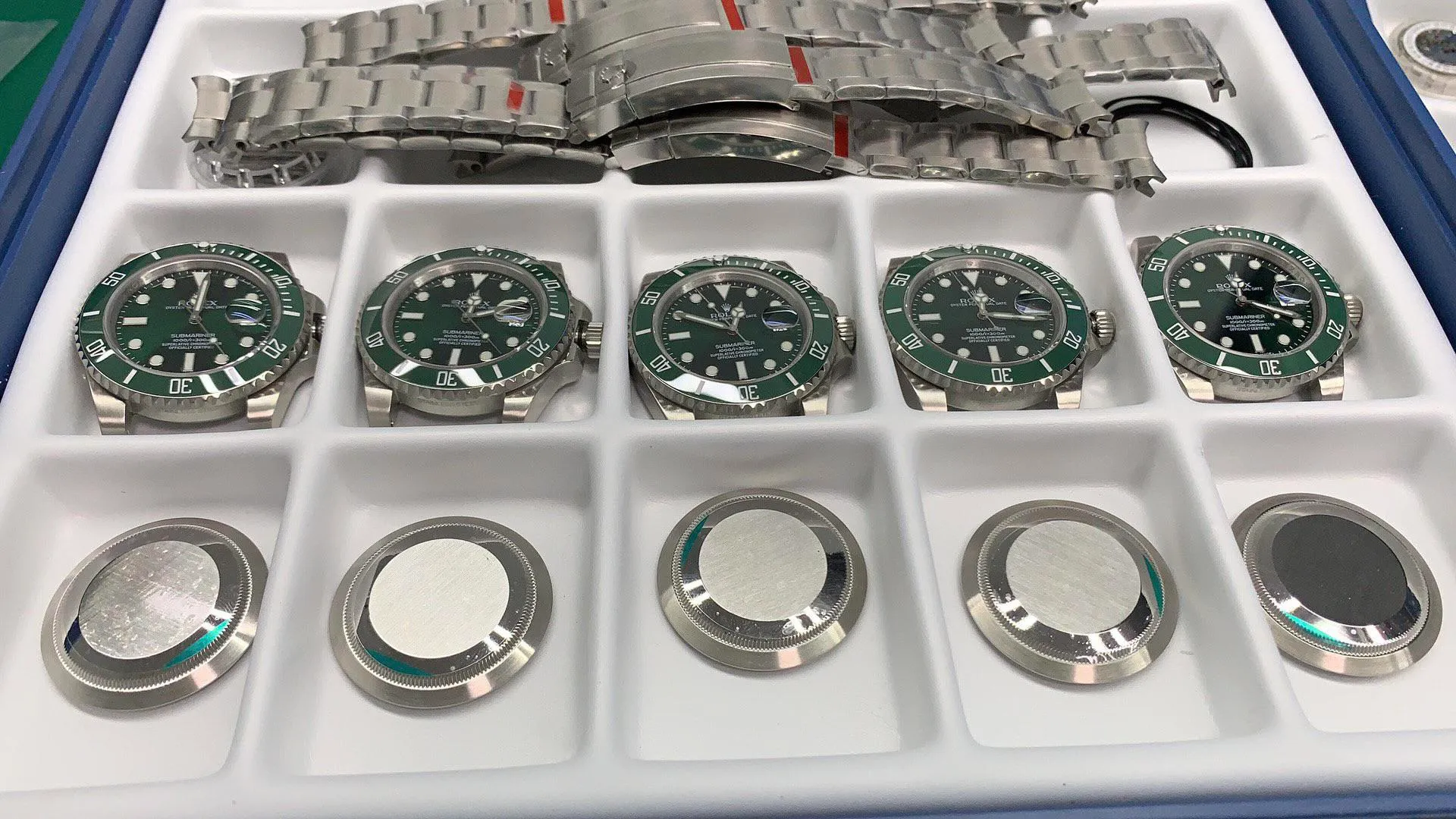
A grading system emerged that is still used today:
- Low tier: Cheap materials, visible defects, obvious wrong fonts and colors. Priced at $50 to $150. Still sold in tourist traps and street markets.
- Mid tier: Better alloys, quartz or basic automatic movements, improved dial printing. Runs $200 to $500. Passable on the wrist but detectable under inspection.
- High tier: Close to 1:1 visual accuracy, with etched crowns, sapphire crystals, and decorated movements mimicking Rolex calibers. Priced $500 to $1,200. These are what the community calls super clones.
Rolex responded with increasingly subtle defenses. In 2002, they introduced the laser-etched coronet (LEC), a microscopic crown logo etched into the sapphire crystal at the six o’clock position, visible only under magnification. Between 2004 and 2008, they rolled out engraved inner rehauts, the metal ring between the dial and crystal, bearing “ROLEX ROLEX ROLEX” and the serial number. The precision of the font, spacing, and alignment was difficult for counterfeiters to replicate perfectly.
By the mid-2000s, industry estimates put global counterfeit watch production at around 40 million units annually. Rolex counterfeits made up the single largest share. Authorities in the EU and US continued seizing large shipments, but online sales and single-watch postal packages made total interdiction impossible.
Here’s what most buyers overlook: the gap between a mid-tier replica and a super clone is not just about materials. It is about tolerances. A genuine Rolex Submariner bezel clicks exactly 120 times per rotation, each detent firm and precise. Super clone factories like Clean Factory and VSF now produce bezels that match this feel. Mid-tier factories do not. That single detail, which costs almost nothing to describe but requires serious engineering to execute, separates a $300 replica from a $900 super clone.
The Forum Revolution: How Online Communities Changed Everything
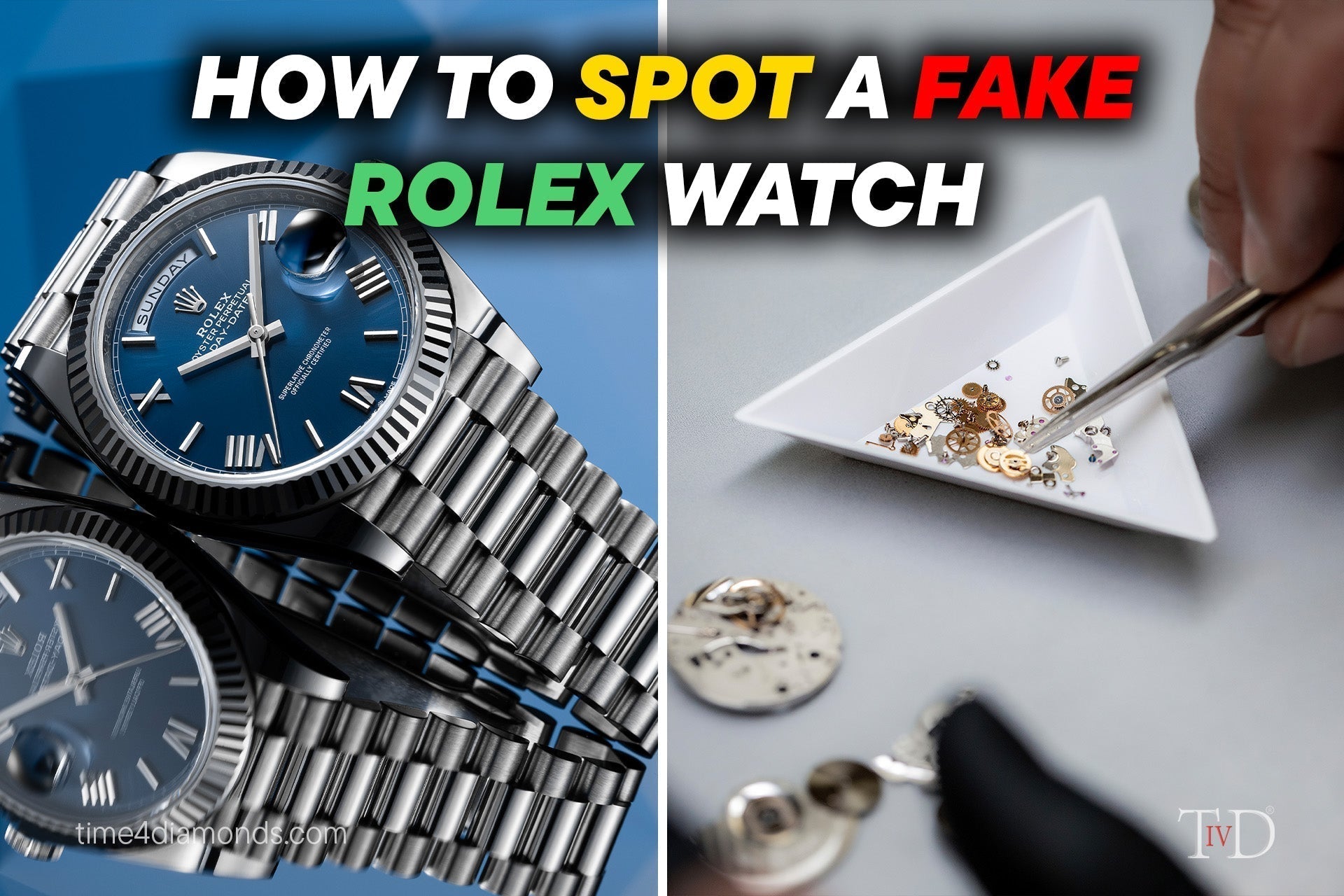
One of the most underappreciated forces behind the rise of super clones is the replica watch forum community. Sites like RepGeek, Replica Watch Info (RWI), and similar communities became the unofficial quality control departments for replica factories. Members posted macro photographs of dial text, measured case dimensions with calipers, and compared bezel click counts against genuine references. When a factory released a Submariner with the wrong shade of green on the bezel, forum members identified it within 48 hours. When VSF got the lug profile wrong on a batch of GMT-Master IIs, the community documented it and the factory corrected the next run.
This feedback loop compressed development cycles dramatically. Factory operators, who monitor these forums under pseudonyms, could see exactly what collectors cared about and adjust production accordingly. The result was a decade of iterative improvement that brought super clone quality to a level nobody in the legitimate industry expected. By 2026, some forum members argue that the best super clones have surpassed the quality control consistency of mid-range Swiss brands, even if the movements inside remain fundamentally different.
The Era of Super Clones: 2020s to Present Day
By 2026, counterfeit and pirated goods represent roughly 2% of global trade, and watches remain a cornerstone of that figure. But the super clone landscape in 2026 barely resembles what existed even five years ago. The best replicas now use multi-axis CNC machining for cases, laser engraving for rehaut text, high-grade ceramic bezels with UV-resistant pigments, and clone movements that mimic Rolex calibers with frightening accuracy.
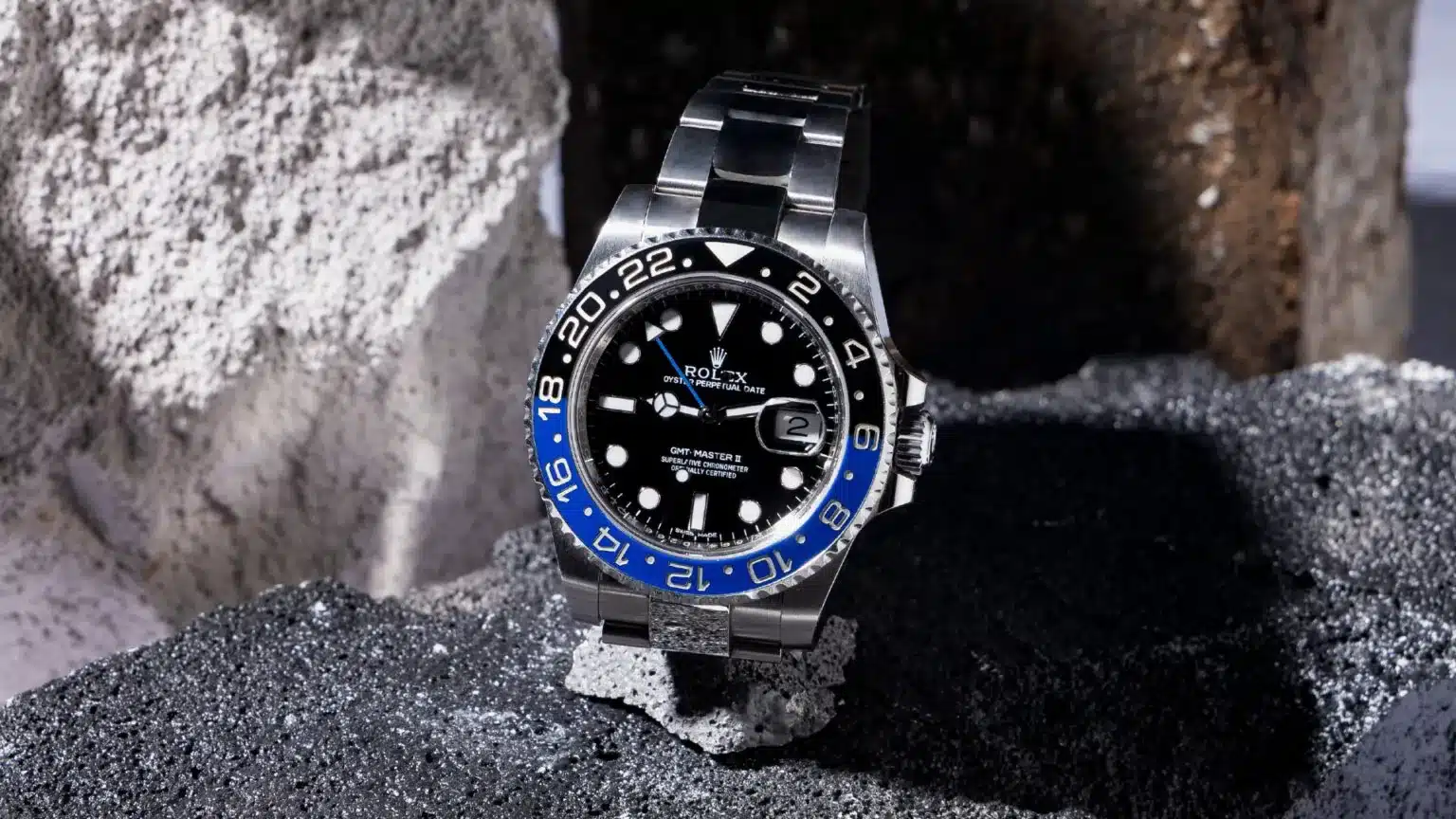
Prices have climbed alongside quality. A top-tier super clone from VSF or Clean Factory runs $600 to $1,200 in 2026, compared to $400 to $800 a few years ago. Part of that increase reflects genuine manufacturing improvements: better steel alloys, more accurate movements, tighter quality control. Part of it reflects rising demand, driven by the combination of Rolex waiting lists that stretch into years and tariffs that have pushed genuine Swiss watch prices even higher. When a steel Submariner 116610LN retails above $14,000 and trades for more on the secondary market, a $900 super clone becomes an easier psychological leap.
The speed of replication has also accelerated. When Rolex releases a new reference, super clone factories now have convincing versions available within weeks, sometimes days. When Rolex updated the Submariner to 41mm references in 2020, super clone factories had dimensionally accurate cases within three months. When the new Land-Dweller debuted at Watches & Wonders 2025, early clone iterations appeared online before the exhibition closed. 3D scanning and rapid prototyping tools allow engineers to reverse-engineer new cases and bezels far faster than was possible even in 2020. Final production parts are still metal and ceramic, not 3D-printed plastic, but digital tools compress the development timeline dramatically.

Key Factories Pushing Innovation in 2026
The replica industry does not operate as a single entity. It is fragmented into specialized factories, each known for particular strengths. These names, VSF, Clean Factory, AR Factory, BT Factory, are marketing designations used by dealers and collectors. They represent underground manufacturing operations concentrated primarily in Guangzhou and other manufacturing hubs in southern China.
- VSF (VS Factory): Widely regarded as the top overall producer in 2026. VSF excels at Submariners, GMT-Master IIs, and Sea-Dwellers. Their cases have the most accurate lug profiles, and their bracelets feature the correct taper and solid end-link fit. Movements use decorated clones mimicking Rolex 31xx and 32xx calibers, with proper beat rates and hacking seconds. Many collectors consider their GMT-Master II Batman 116710BLNR among the best super clones available anywhere. In 2026, VSF has doubled down on caliber-matched architecture, with rotor and bridge layouts that mirror genuine Rolex movements more closely than any previous generation.
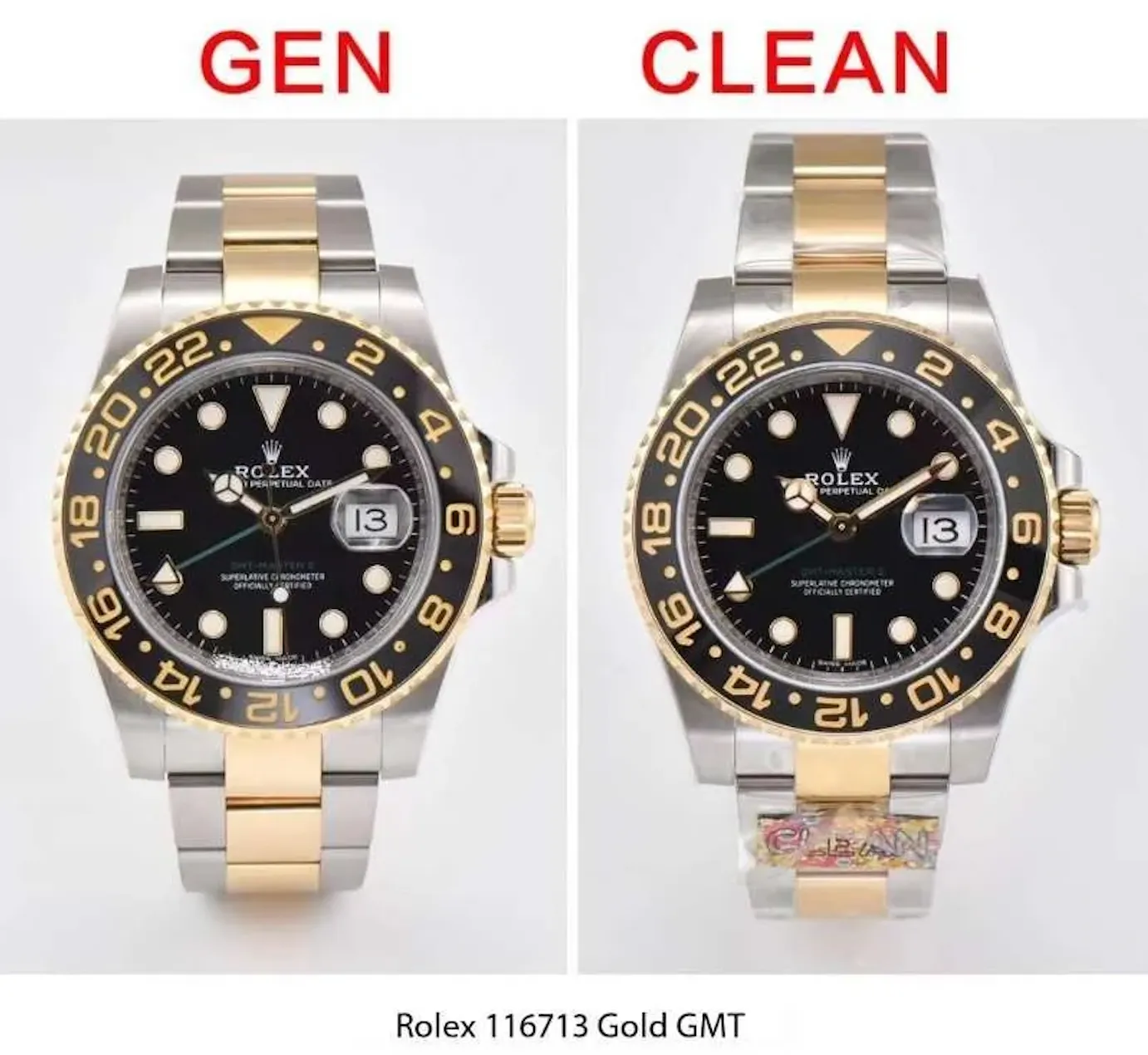
- Clean Factory: The go-to name for Daytonas and ceramic-bezel Submariners. Their Dandong 4130 clone movement, used in the Daytona 116523, replicates the genuine layout with running seconds at six o’clock and functional chronograph pushers. Their Hulk 116610LV and latest-generation ceramic Submariners are frequently classified as “NWBIG” (Not Worth Buying In Genuine) by the replica community, meaning the visual and functional similarity to the real watch is so high that spending $15,000+ on the genuine article becomes harder to justify. Clean’s 2026 focus has been on dial color accuracy and lume application, areas where they have historically led.
- BT Factory: The chronograph specialist. BT focuses almost exclusively on Daytona-style super clones and has earned a reputation for correct sub-dial spacing, stable automatic chronograph clone movements, and pusher feel that rivals genuine. Some 2026 reviewers suggest BT even surpasses Clean for movement behavior, though Clean maintains the edge in dial and bezel finishing.
- AR Factory: Known for strong case and bracelet finishing, with clean polishing and brushing transitions. Slightly behind VSF and Clean in the 2026 overall rankings but still considered top-tier, especially for polished sports models.
- VR Factory: Specializes in movement performance and internal engravings that closely mimic Rolex calibers. Often the choice for collectors who prioritize what is inside the case as much as what is on the dial.
- QF: A smaller but highly regarded factory that excels at specific GMT-Master II and Datejust variants. Less broad catalog than VSF, but positioned by collectors as a connoisseur pick for particular references where they nail dial texture and indices.
Super Clone vs. Genuine Rolex: How They Compare
| Aspect | Super Clone (2026) | Genuine Rolex |
|---|---|---|
| Case Material | 904L-type steel, CNC machined | Proprietary Oystersteel (904L), hand-finished |
| Crystal | Sapphire with AR coating, etched coronet | Sapphire with proprietary AR, etched coronet |
| Movement | Decorated clone caliber, 28,800 vph | In-house Rolex caliber, COSC certified |
| Bezel | Ceramic insert, accurate colors and click | Cerachrom insert, proprietary process |
| Price Range | $600–$1,200 | $10,000–$60,000+ |
| Durability | Good for years, variable QC | Designed for a lifetime, serviced indefinitely |
| Detection | Very hard without tools or caseback opening | N/A |
| Resale Value | Negligible | Strong, often above retail for steel sports |
For a deeper comparison with specific numbers, our breakdown of the $999 super clone Submariner vs. the $15,000 original walks through every detail side by side.
The “Superclone Crisis” and Its Ripple Effects
By 2025–2026, watch industry commentary had started using the term “superclone crisis” to describe what was happening. The issue extends beyond individual buyers getting duped. Pre-owned dealers on platforms like Chrono24 have inadvertently sold super clones as genuine watches, sometimes multiple times before the fakes were caught. Bob’s Watches, one of the largest pre-owned Rolex dealers, has published extensive authentication guides acknowledging that modern fakes require professional-grade inspection. Insurance companies have raised premiums on Rolex collections, with reported increases of 30–50% for some pre-owned policies, because verifying authenticity has become so much harder.
The real story is more nuanced than simple panic. Rolex’s brand equity remains enormous. Their official site reports production exceeding one million watches annually, and demand continues to outstrip supply. But the super clone phenomenon has created genuine anxiety in the secondary market. When a professional authenticator needs to open the caseback and examine the movement under magnification to confirm a watch is real, something fundamental has shifted.
What makes 2026 different from even two years ago is the scale of the problem. U.S. Customs and Border Protection reported seizing over $1 billion worth of counterfeit goods in a single fiscal year, with watches consistently ranking among the top categories. In one 2022 operation, CBP intercepted approximately 460 counterfeit Rolex watches valued at $20 million in MSRP across just three shipments. EU customs authorities report hundreds of thousands of detained counterfeit watch items annually. And those are the seizures authorities know about. The actual volume flowing through undetected, particularly single-watch parcels shipped via express carriers, is almost certainly far higher.
What Drives Demand in 2026
Three forces are converging to keep super clone demand at record levels. First, Rolex waiting lists remain absurdly long. Popular steel sports models are allocation-only at authorized dealers, with wait times measured in years for new clients. Priority goes to established customers with extensive purchase histories. Second, tariffs and inflation have pushed genuine Rolex prices higher. Trade tensions have raised landed costs for Swiss watches in major markets like the US and China, as explored in our analysis of tariffs and Rolex prices. Third, the secondary market premium persists. Even after the correction from the 2021–2022 bubble, many steel sports Rolexes still trade above retail on the grey market. For context, see our piece on the collapse of the watch market and falling prices. Together, these forces make the $700 super clone look like a rational alternative.
There is a cultural shift happening too. Younger buyers, raised in an era where “dupes” and alternatives are celebrated on social media, approach replica watches differently than previous generations. A 2025 survey by a major luxury resale platform found that 38% of respondents under 35 had considered buying a super clone, primarily for the design and style rather than to deceive anyone. The stigma has softened, even as the legal and ethical questions remain real.
Counterfeit Watch Seizures and Law Enforcement
Authorities continue to seize millions of dollars worth of counterfeit watches annually. Rolex consistently ranks as the most seized brand at US and EU borders. Operations target organized counterfeiting networks rather than individual buyers. Shipments are intercepted misdeclared as “fashion accessories” or “gifts.” Raids on local resellers and “frankenwatch” workshops, where genuine and clone parts are combined, have become more frequent.
For individual buyers, the risk profile depends heavily on jurisdiction. In most countries, customs seizure and destruction of the watch is the typical outcome for a single-watch parcel. Criminal prosecution is reserved for commercial-scale activity. But laws vary, and buyers should understand their local regulations. For more context on where fakes are commonly sold and the associated risks, see our guide on where fake watches are commonly sold.
Why Buying from Transparent Vendors Matters
Can buying super clones be done ethically? It can, when the transaction is transparent. Sites like replicarolexexpert.io label their products clearly as super clones, making no attempt to pass them off as genuine. That distinction matters enormously. The damage caused by the replica trade comes not from people choosing to wear a copy, but from people being deceived into paying genuine prices for fake watches. Transparent vendors draw a hard line: you know exactly what you are getting, and what you are not.
The argument runs along three practical lines:
- Accessibility: A steel Datejust 36mm 116234 retails for well over $10,000 at an authorized dealer, if you can get one. For many watch enthusiasts, that price and that wait time are simply out of reach. Super clones offer a way to experience the design and wearability of iconic watches without a five-figure outlay.
- Honesty: Selling a super clone as a super clone is fundamentally different from selling a super clone as genuine. The replica market’s worst actors are the ones who deceive, not the ones who are upfront about what they sell.
- No harm to individuals: Personal-use purchases from reputable vendors do not fund the kind of organized criminal networks that law enforcement prioritizes. The enforcement focus, by design, stays on large-scale commercial operations.
For those just starting to explore the replica world, our beginner’s guide to replica Rolex watches covers the basics of what to look for and which models make the best entry points.
FAQ
1. How did Rolex replicas start and evolve over time?
Replica Rolex production began in the 1930s using cheap brass and poor engraving techniques. By the 1980s, replica makers had shifted to better alloys and quartz movements, with Canal Street in New York City becoming the most famous retail hub. The 2000s brought sapphire crystals, ceramic bezels, and the first cloned automatic movements. Today’s super clones, produced by factories like VSF and Clean Factory, use 904L-type steel, decorated clone calibers, and CNC-machined cases that make detection extremely difficult without specialized tools.
2. How do 2026 super clones compare to genuine Rolex watches?
Visually, the best super clones are remarkably close to genuine Rolex timepieces. They use similar materials (904L-type steel, sapphire crystals, ceramic bezels) and decorated movements that mimic Rolex calibers. Prices range from $600 to $1,200 compared to $10,000+ for genuine models. However, genuine Rolex watches offer superior long-term durability, COSC-certified precision, and strong resale value that super clones cannot match.
3. Is it legal to buy replica Rolex watches?
Laws vary significantly by country. In most jurisdictions, buying a replica for personal use carries the risk of customs seizure and destruction of the item. Criminal prosecution is typically reserved for commercial-scale importing and selling. Transparent vendors who label products as replicas rather than passing them off as genuine occupy a different ethical and legal space than scammers selling fakes as authentic.
4. What are the best super clone Rolex factories in 2026?
VSF (VS Factory) is widely regarded as the top overall producer in 2026, excelling at Submariners, GMT-Master IIs, and Sea-Dwellers. Clean Factory dominates Daytona and ceramic-bezel Submariner production. BT Factory specializes in chronograph clones. AR Factory and VR Factory round out the top tier with strengths in case finishing and movement engraving, respectively. Each factory tends to specialize in specific models rather than producing the full Rolex range.
5. Why have super clone prices increased?
Super clone prices have risen from roughly $400–$800 a few years ago to $600–$1,200 in 2026, reflecting genuine manufacturing improvements: better steel alloys, more accurate clone movements, tighter quality control, and faster replication of new Rolex references. Demand has also surged due to Rolex waiting lists, tariff-driven price increases on genuine watches, and a cultural shift toward accepting high-quality alternatives.
Conclusion
The history of replica Rolex watches is, in many ways, a history of desire outpacing access. From crude brass knockoffs in the 1930s to the CNC-machined, movement-decorated super clones of 2026, the counterfeit industry has shadowed Rolex at every step. Each time Rolex raised the bar with a new security feature or manufacturing innovation, replica factories responded within months or years. The gap between genuine and fake has narrowed to a point that would have seemed impossible even a decade ago.
Understanding that history makes you a more informed buyer, regardless of which side of the market you stand on. If you are shopping for a genuine Rolex, knowing the super clone landscape helps you protect yourself from costly mistakes. If you are considering a super clone, understanding the factories, grades, and pricing helps you make a smarter purchase from a reputable source.
The replica market is not going away. If anything, it is maturing, specializing, and improving at a rate that surprises even longtime industry observers. The best approach is one built on knowledge and transparency. Explore our collection of top super clone Rolex models, check our guide to the most commonly replicated watches, or dive into what makes Rolex movements special to continue building your expertise. And if you are ready to browse, our full collection of super clone Rolex watches has something for every taste and budget.