

Articles
How to spot a Fake Rolex 2026 Guide
Apr
Here is a fact that still surprises people: there are more fake Rolexes circulating worldwide than genuine ones. The Swiss maker produces roughly 1.2 million watches per year, while customs agencies seize hundreds of thousands of counterfeits annually — and those are only the ones they catch. For anyone looking to buy an authentic watch, that flood of copies is a genuine problem. But it also creates a frustrating situation for the replica industry itself, because the vast majority of fakes on the market are cheap, poorly made knockoffs that drag down the reputation of every replica watch out there.
As the leading vendor of replica Rolex watches — from budget-friendly options to Superclone grade — we have a unique perspective on this. We are happy that replica watches exist and that demand for them is strong. But we are firmly opposed to the low-quality fakes that leave a bad impression on the entire industry. In this guide, we focus on the differences between a fake Rolex vs real Rolex, specifically looking at watches in our range: budget-friendly replicas and superclone-grade pieces. We should be upfront about something: the idea of a “1:1 replica” is marketing speak, not reality. Even the highest-grade superclones have subtle differences. They are not inferior in quality — the discrepancies are things like a barely different tone in the bezel click, a slight variation in dial color on vivid models, or micro-details that require specialized equipment to detect.
Can You Tell if a Rolex is Real?
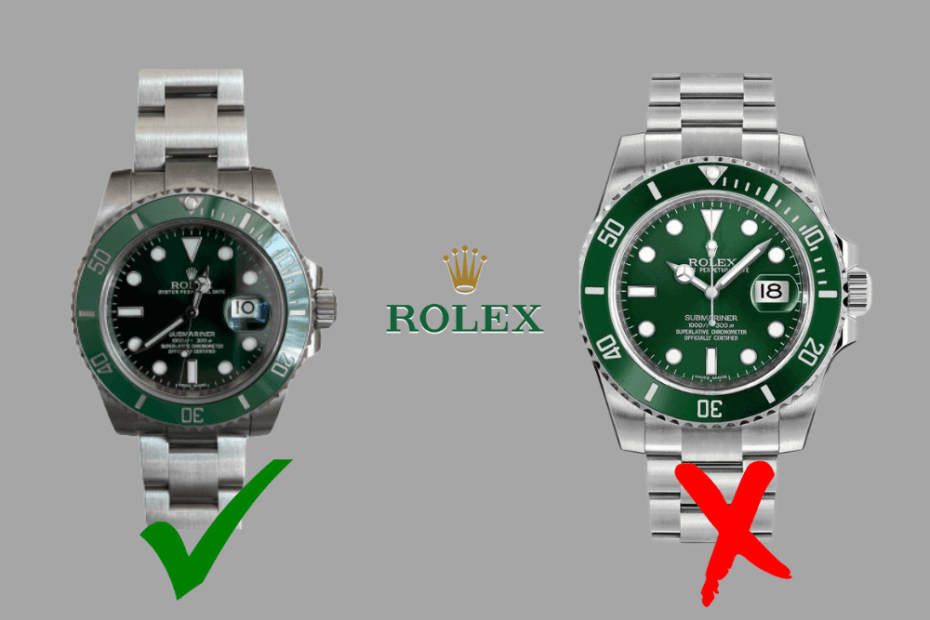
Before we walk through the key authentication points, test yourself. Below are side-by-side images of real and fake watches. Click on the one you think is authentic.
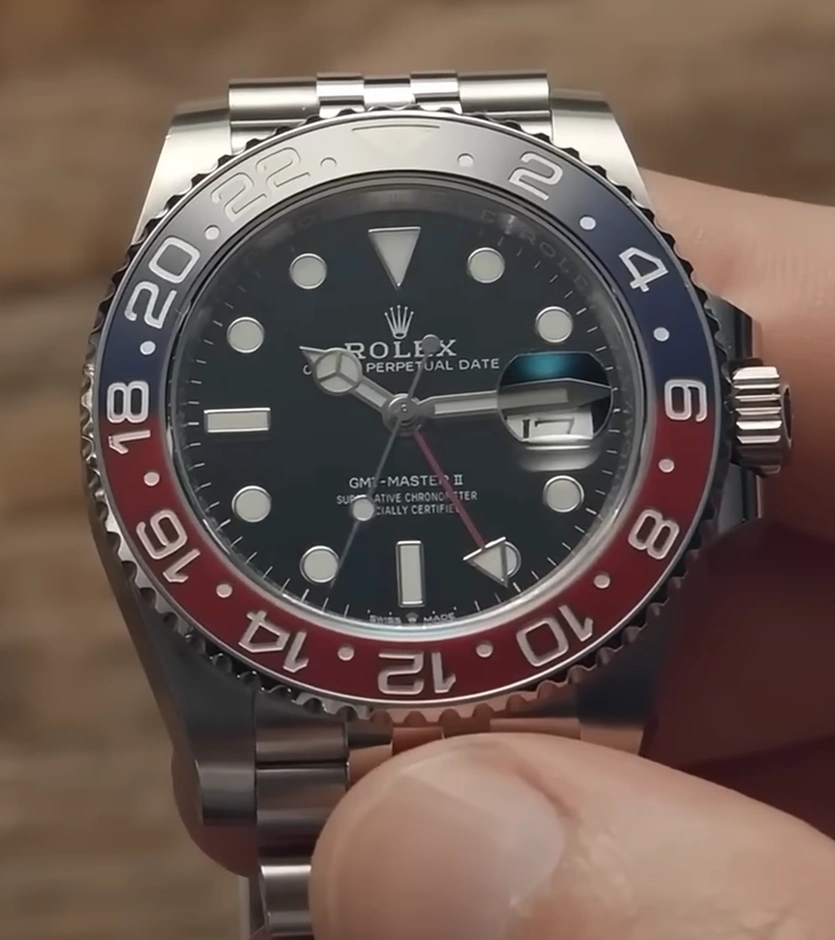
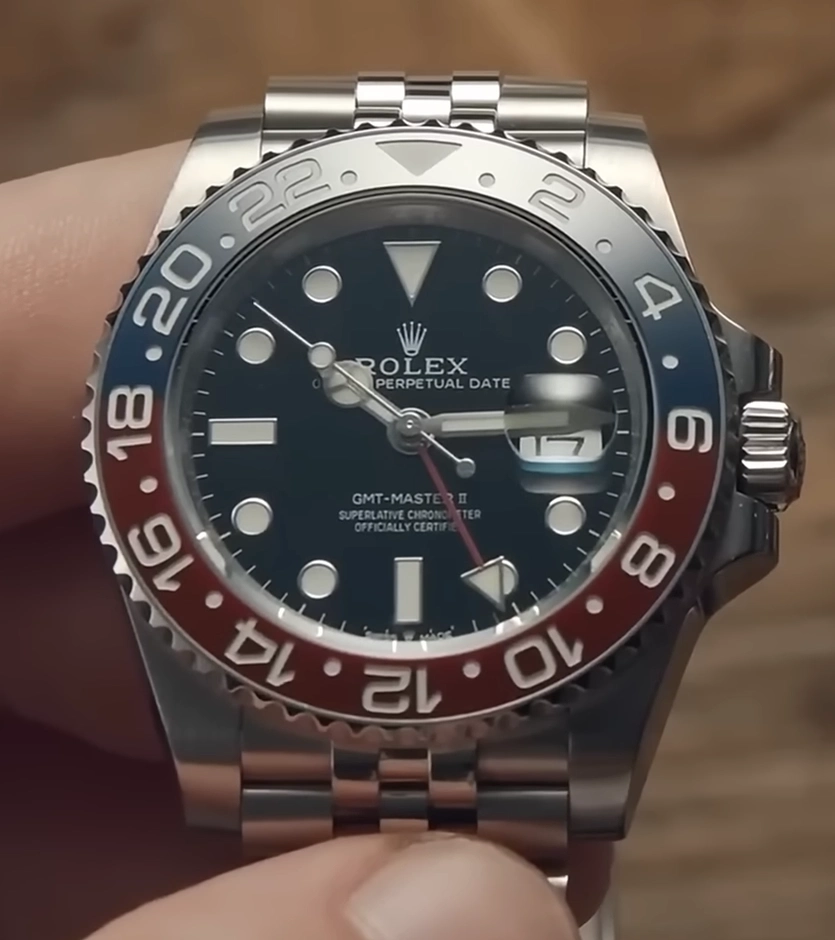
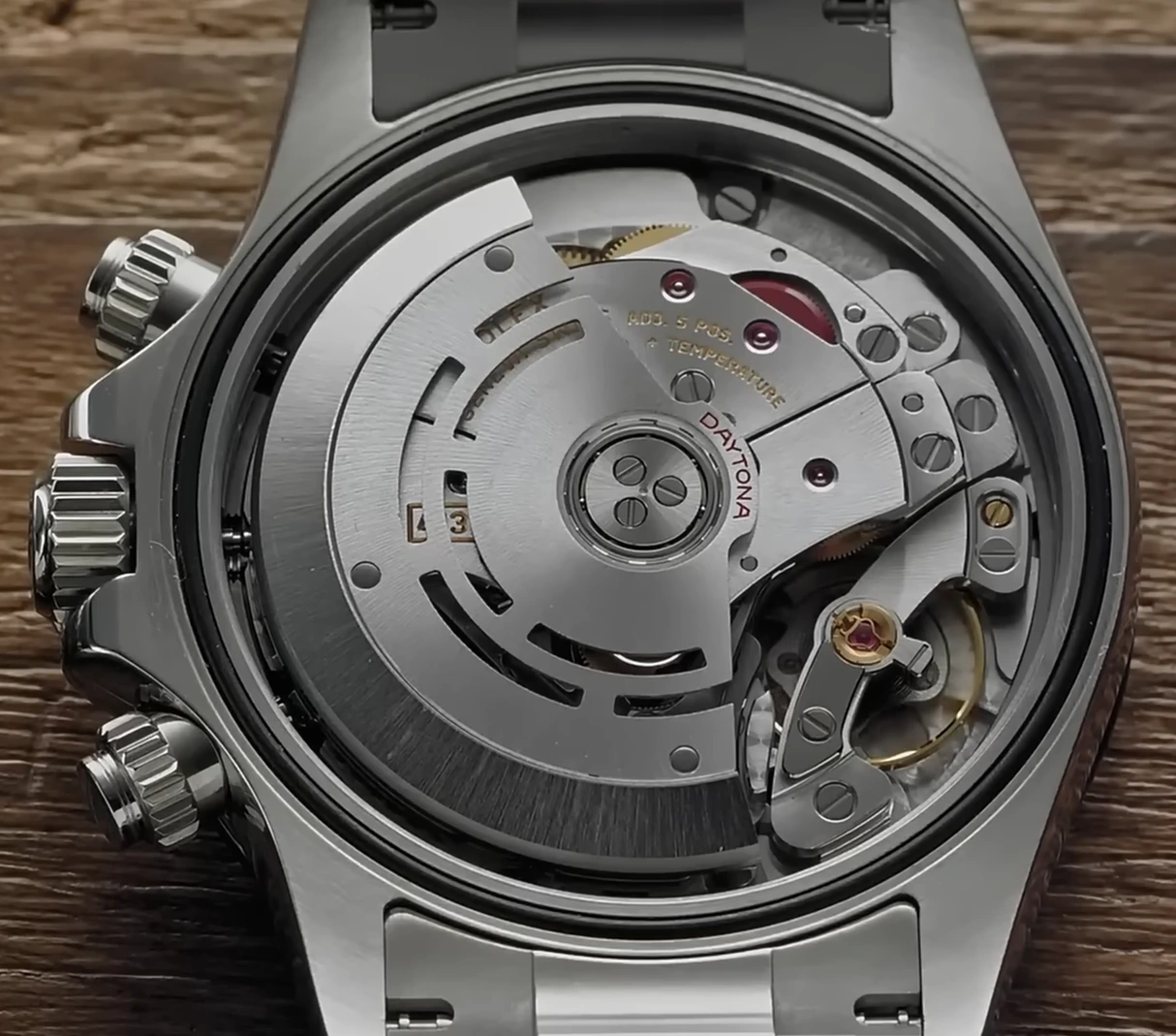
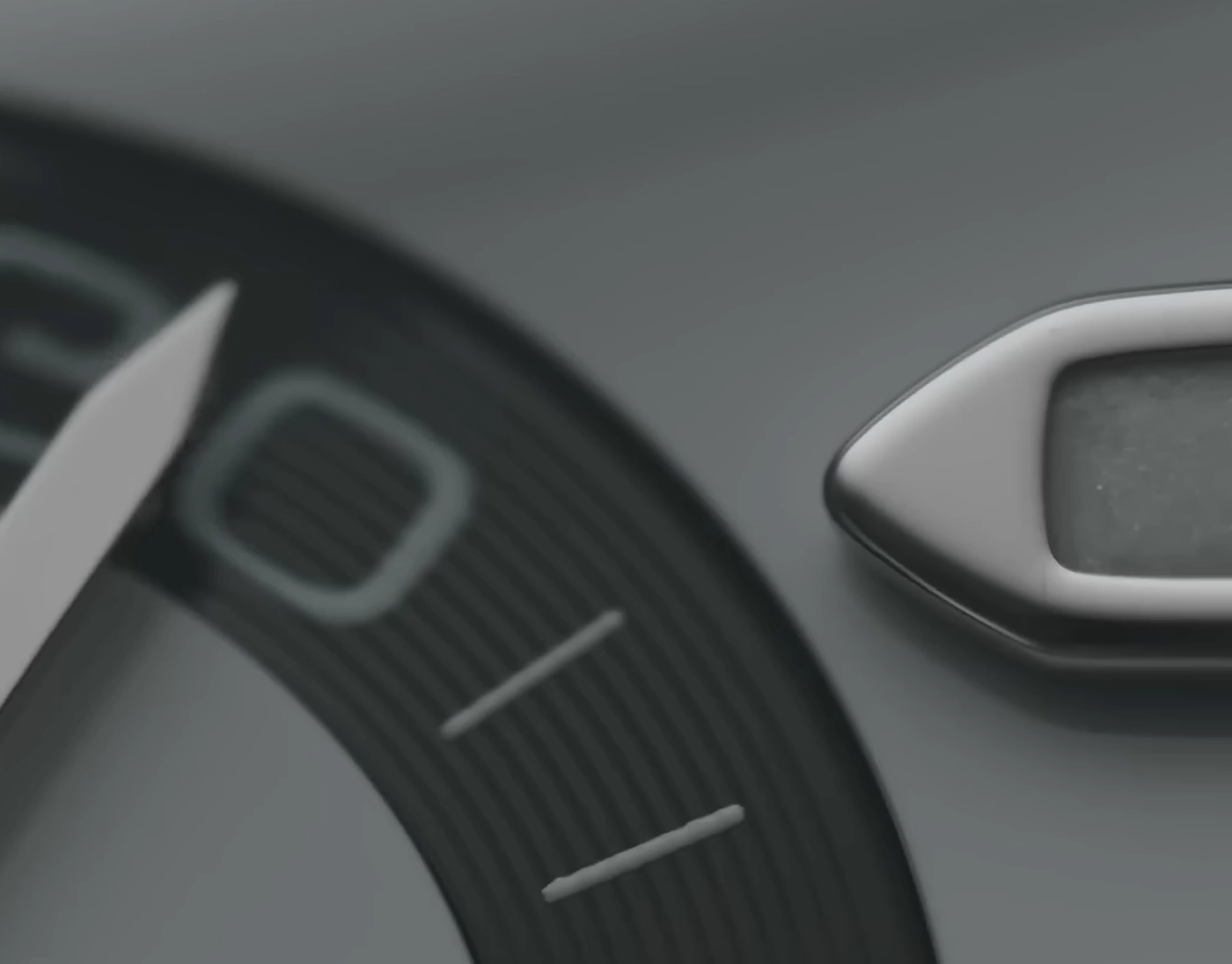
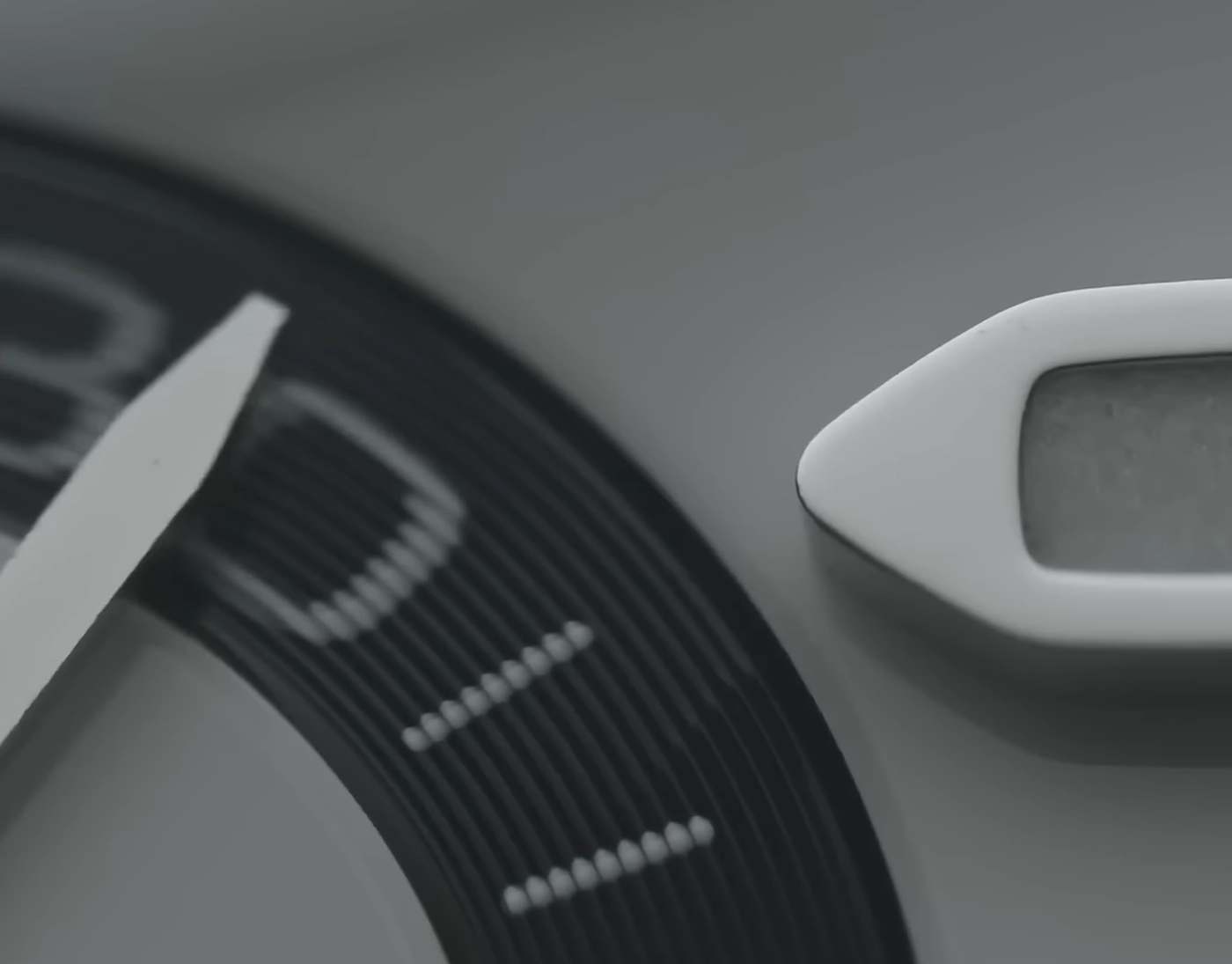
How did you do? We deliberately chose angles and zoom levels that highlight the subtle differences we cover in this guide. Show those same watches from across a room, and even seasoned collectors would be guessing.
The second reason authentication is so challenging is that genuine Rolexes are not perfect either. Misaligned parts exist on factory-fresh watches. Poorly finished areas show up on cases that cost $15,000. Rolex builds exceptional watches, but the idea that every detail is flawless on every unit is a myth that the brand benefits from. Knowing this makes the identification process harder — you cannot simply look for “any imperfection” and call it fake.
How to Tell if a Rolex is Real: The 2026 Authentication Guide
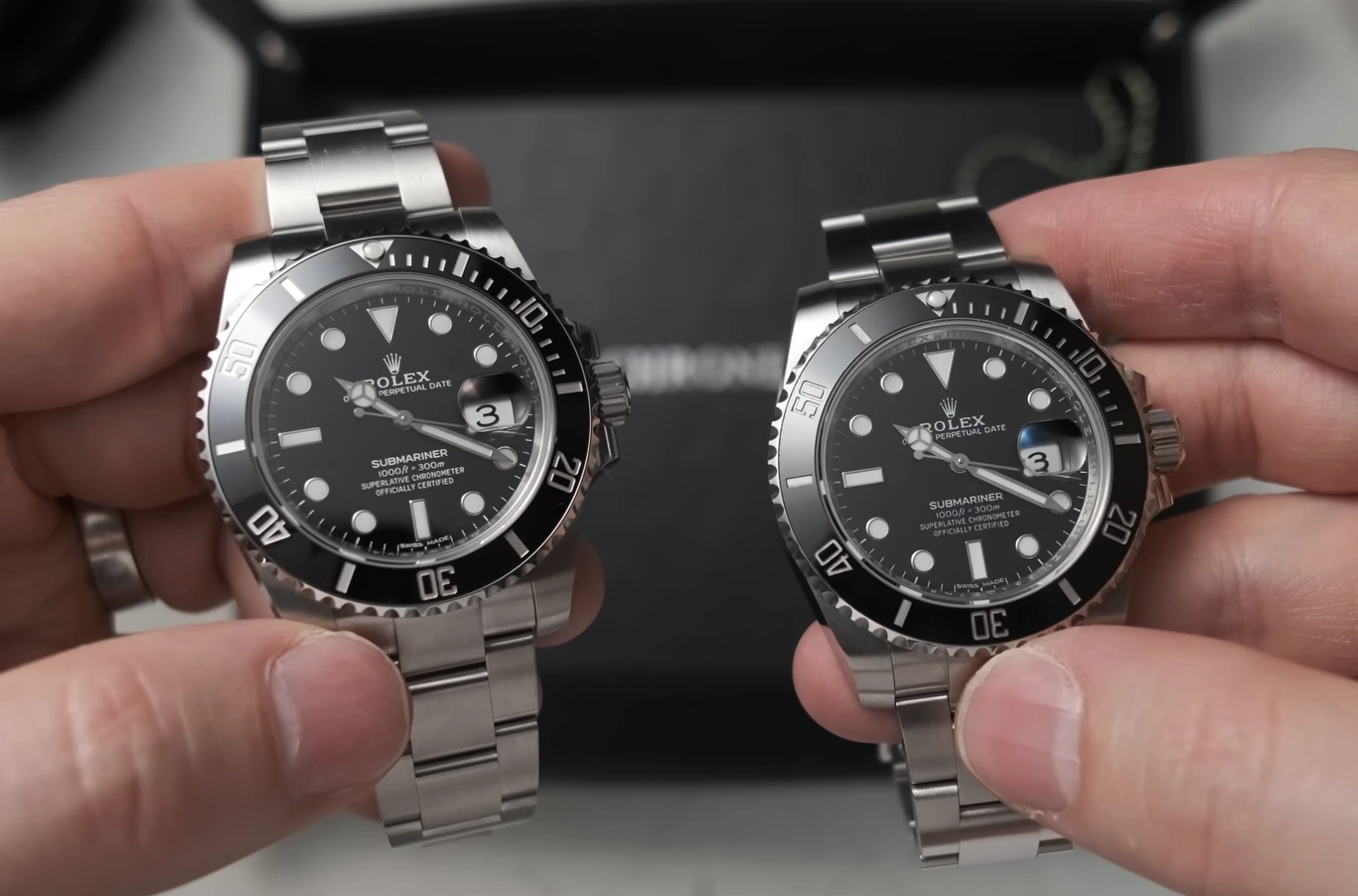
Here is a detailed video comparison of our Superclone Replica Rolex Submariner 126610LN against the genuine article.
1. Rolex Serial Number Verification
The first check is the serial number. Every Rolex carries a unique serial, and before 2010, you could date a watch by it. After 2010, Rolex switched to a randomized alphanumeric system, so serial numbers no longer follow a predictable sequence. To check whether a serial number might be fake, type it into Google with quotation marks on both sides — this forces an exact-match search. If the same serial pops up attached to multiple watches in different configurations, it is almost certainly a reused fake serial. For example, searching “Z754008” returns results showing that number on both a Submariner black dial and a Two-Tone model, along with forum discussions flagging it as suspicious.
Not finding any results does not guarantee authenticity, though. Budget-friendly replicas produce large batches sharing one serial number because it is cost-effective. Higher-end Superclone Rolex watches use significantly smaller batches per serial — sometimes unique numbers for each piece produced. Our Superclone Rolex watches generally have unique serial numbers, but we strongly discourage clients from attempting to pass them off as genuine. The legal consequences are real, and the ethical line is clear: replica watches are for personal enjoyment, not for deceiving others.
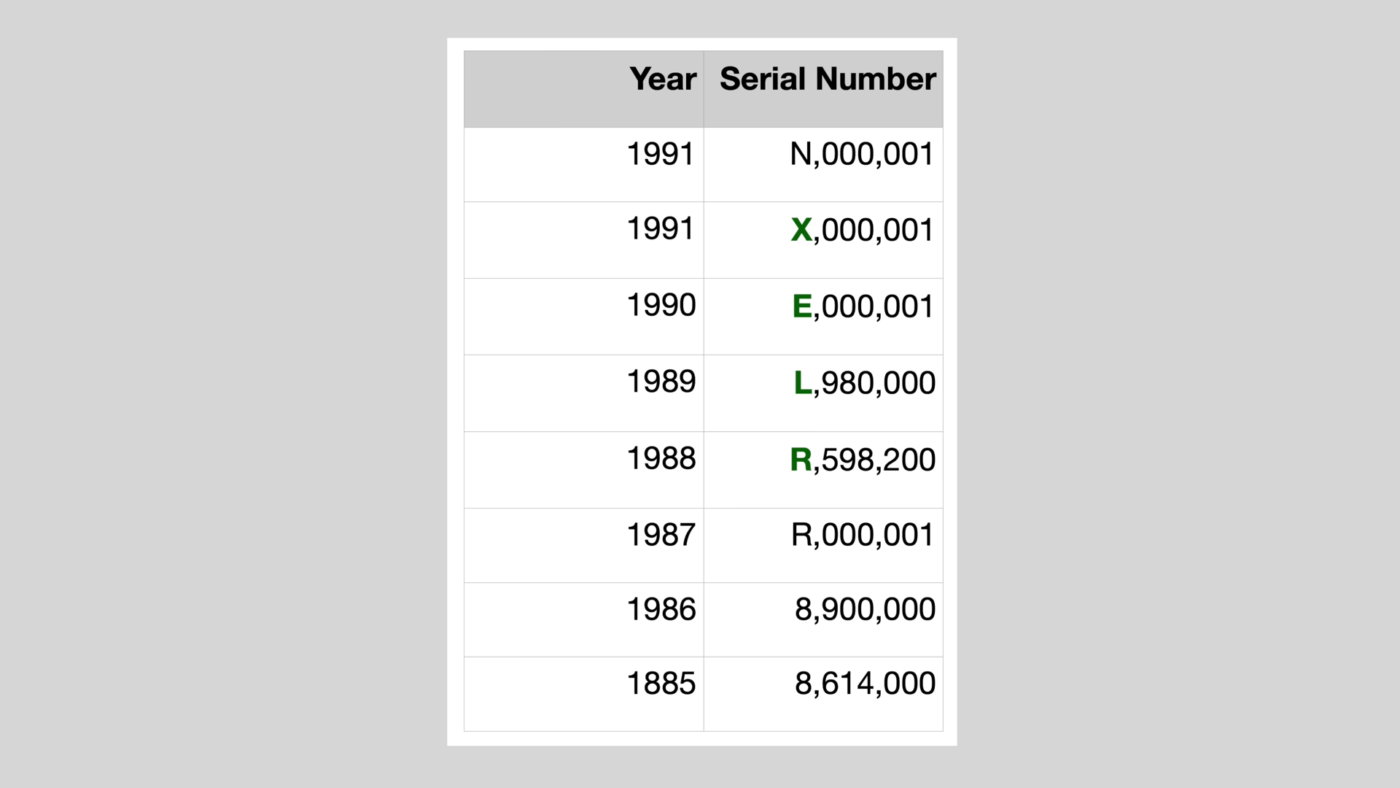
Fun fact: between 1987 and 1990, Rolex actually embedded the word “ROLEX” into its serial number sequence (minus the letter O, since it looks too much like a zero). If you encounter a vintage piece from that era, the serial will spell out part of the brand name — a quirky detail that counterfeiters sometimes get wrong on vintage homages.
Where is the Serial Number on a Rolex?
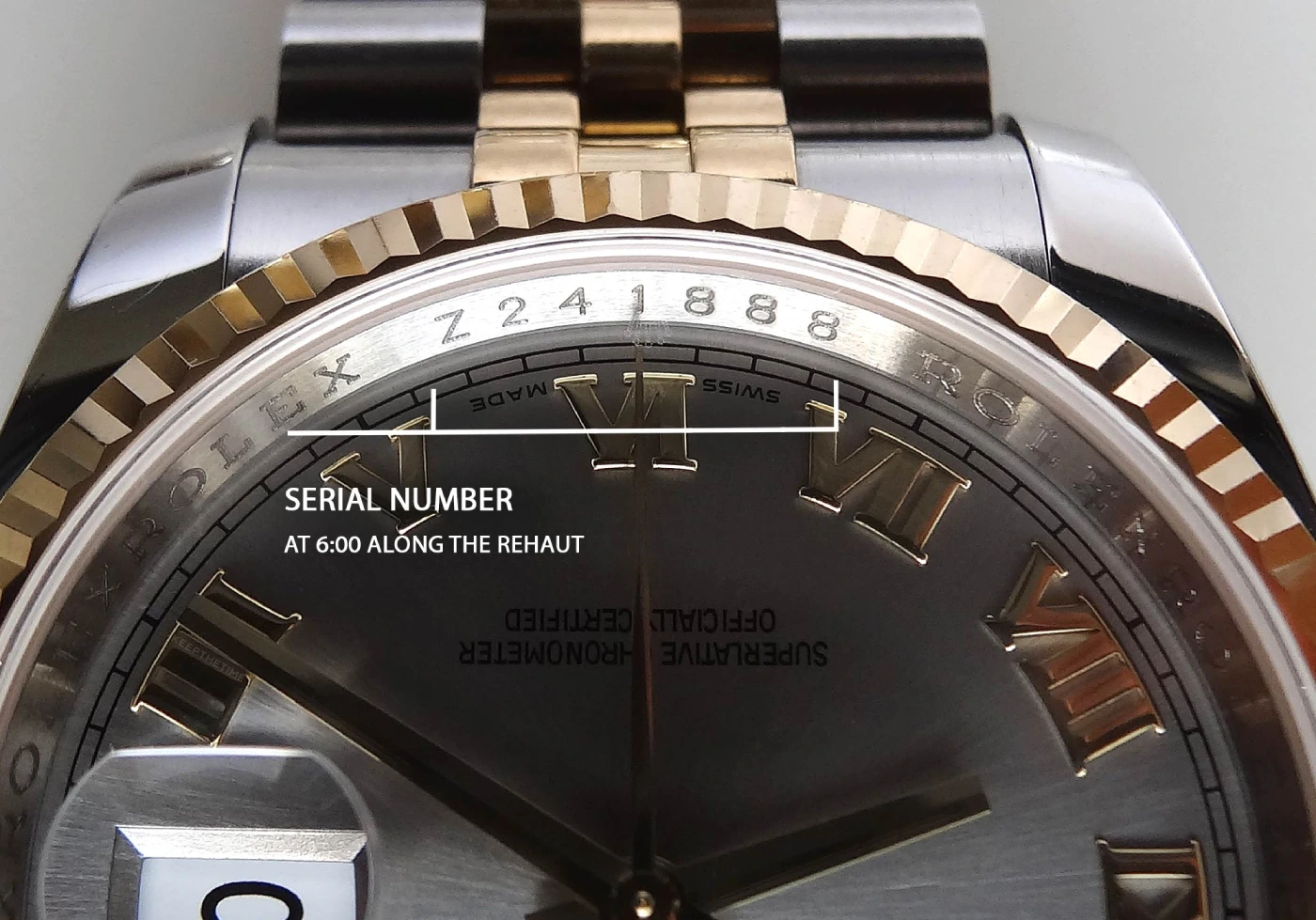
Older Rolex watches have their serial number engraved between the lugs at the 6 o’clock position (you need to remove the bracelet to see it). Modern Rolexes — from roughly 2008 onward — have the serial engraved on the inner rehaut ring at 6 o’clock, visible through the sapphire crystal without removing anything.

2. Rolex Cyclops Lens and Date Window
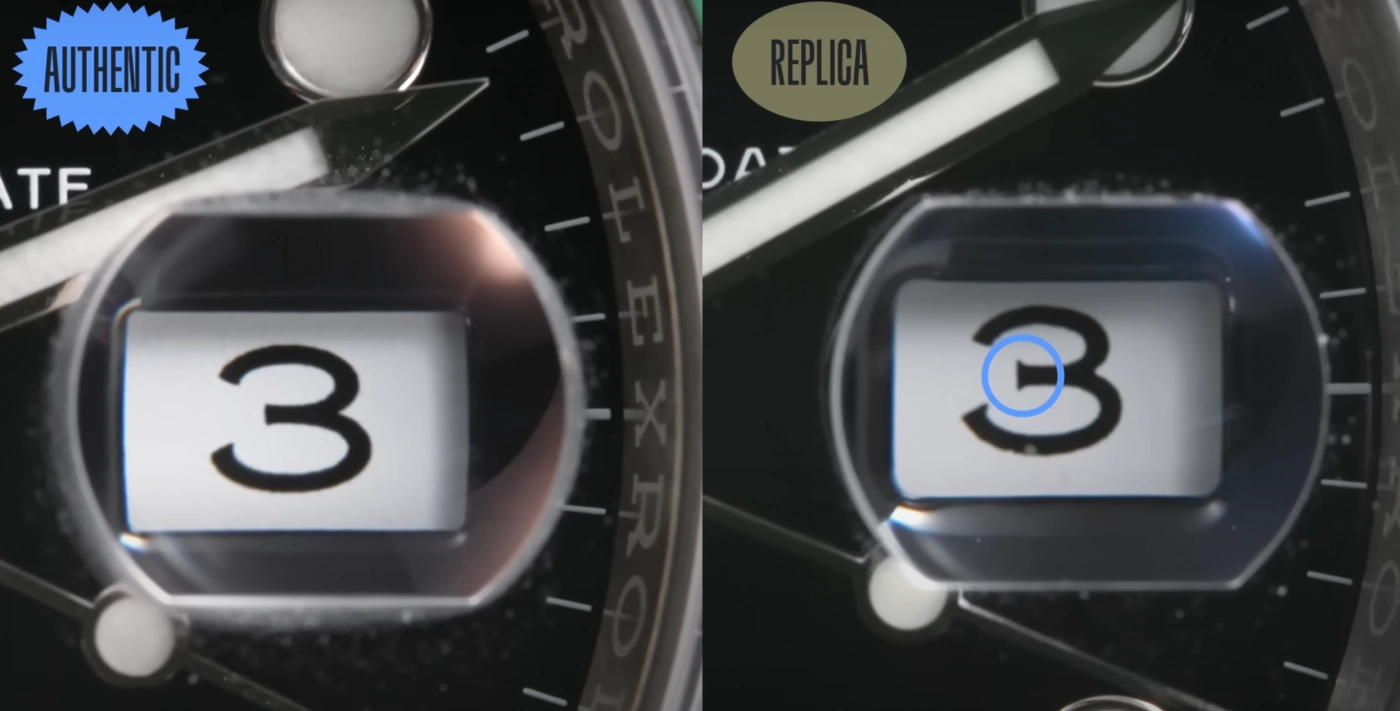
The Cyclops magnifier sitting above the date window is one of the most recognizable Rolex signatures — and one of the hardest things for replica factories to nail. A genuine Rolex Cyclops magnifies the date by exactly 2.5x. Lower-end fakes typically achieve only 1.5x magnification, making the date look flat and undersized. But it goes beyond magnification. Rolex applies a proprietary anti-reflective coating beneath the Cyclops that eliminates virtually all glare — collectors sometimes call this the “black hole effect” because the date appears suspended in a void of darkness under certain lighting. Even high-end superclones often have a visible tint under the Cyclops that gives them away when viewed from specific angles.
Checking the date font itself requires a side-by-side comparison with a known authentic watch. The typeface is usually very close on superclones, but certain characters reveal differences under magnification — the peak of the number “3” is a classic tell where the curvature differs from the genuine font.
3. Rolex Laser-Etched Crown (LEC)
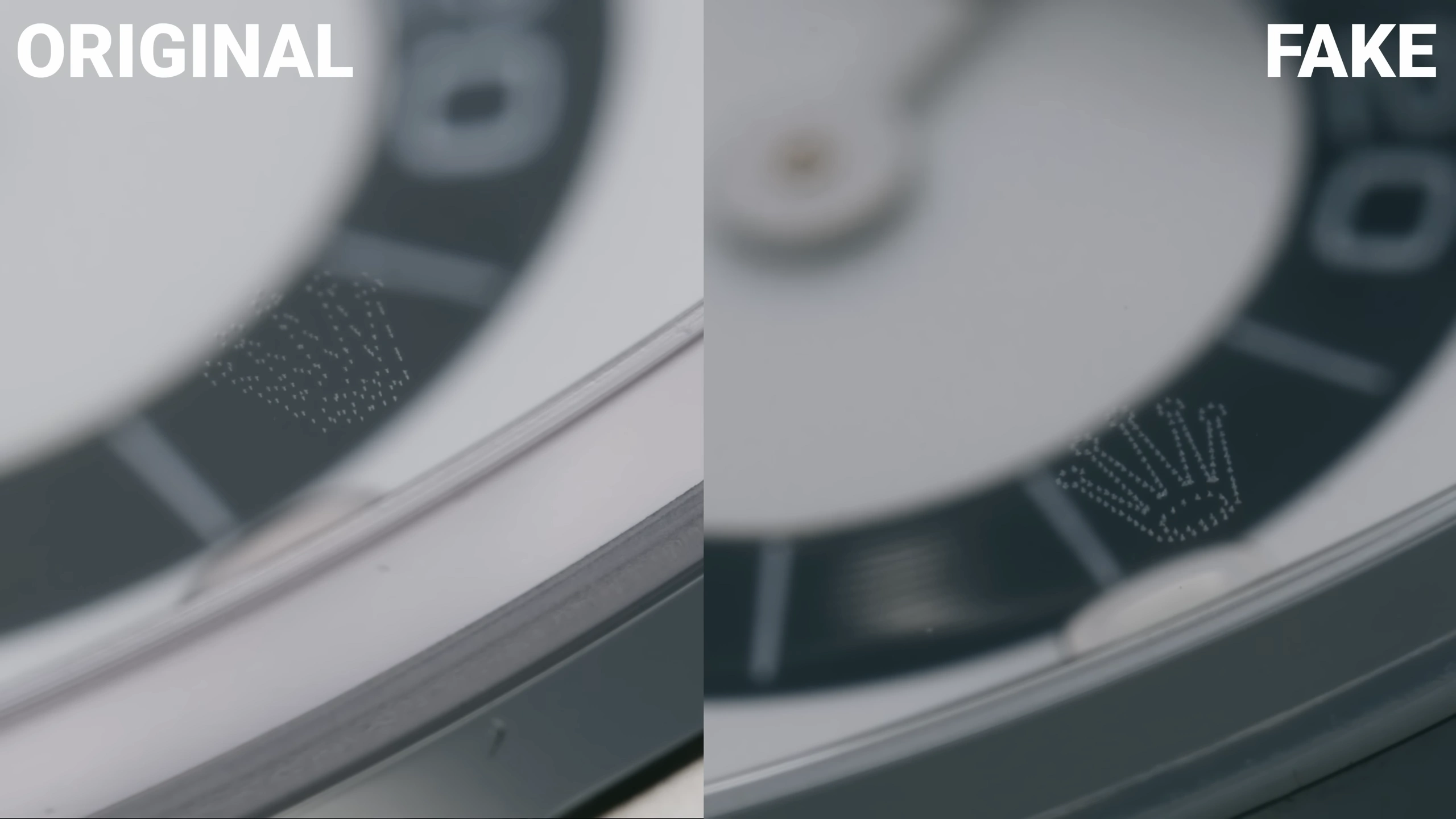
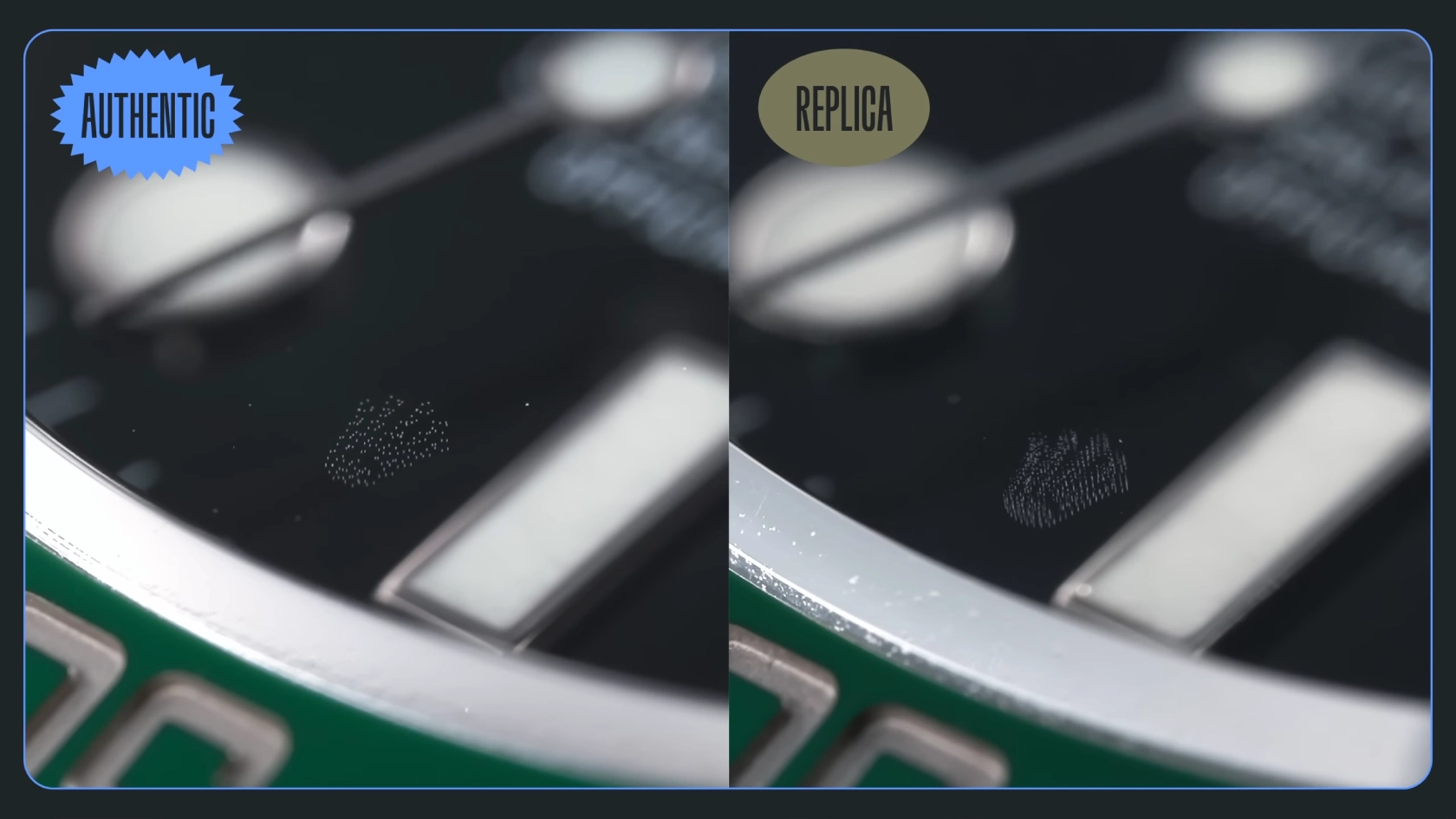
This is where things get genuinely technical. Since 2001, Rolex has hidden a microscopic crown logo laser-etched into the sapphire crystal at the 6 o’clock position. The key word is hidden — on a genuine watch, this crown is nearly invisible to the naked eye. You typically need a jeweler’s loupe, a macro lens, or a strong directional light to find it. If you can see the crown easily without magnification, that is actually a red flag.
Rolex does not simply etch a line drawing into the crystal. The crown is composed of tiny laser-burned dots at varying depths within the sapphire, creating a three-dimensional effect that is extraordinarily difficult to replicate. Cheaper replicas either skip the crown entirely or engrave it rather than laser-etching it. Mid-tier and even some high-end fakes over-accentuate the crown to make it visible — a dead giveaway. On our superclones, the LEC is deliberately subtle, mimicking the near-invisibility of the genuine article. Grab a loupe or macro lens and check whether those dots exist at different depths.
4. Rolex Rehaut Engraving
The rehaut is the inner ring connecting the dial to the crystal, and Rolex laser-engraves “ROLEXROLEXROLEX” all the way around it, with the crown logo at 12 o’clock and the serial number at 6 o’clock. Rolex started this practice in 2004, so any model predating that year will not have it — something counterfeiters sometimes forget.
There are two main things to check. First, the execution: Rolex’s laser engraving is surgical in its precision. Every letter is razor-sharp, perfectly aligned, and utterly consistent. Some replica rehauts show deeper engraving than the original, or a thick dark line bisecting the lettering. You need an ultra-macro lens to spot this — a regular magnifying glass will not cut it.
Second, check the alignment. On the right side of the dial (between 1 o’clock and 5 o’clock), the “X” of each “ROLEX” should align with the hour markers. On the left side (7 o’clock to 11 o’clock), the “R” should align. Even high-end superclones occasionally misalign this positioning.
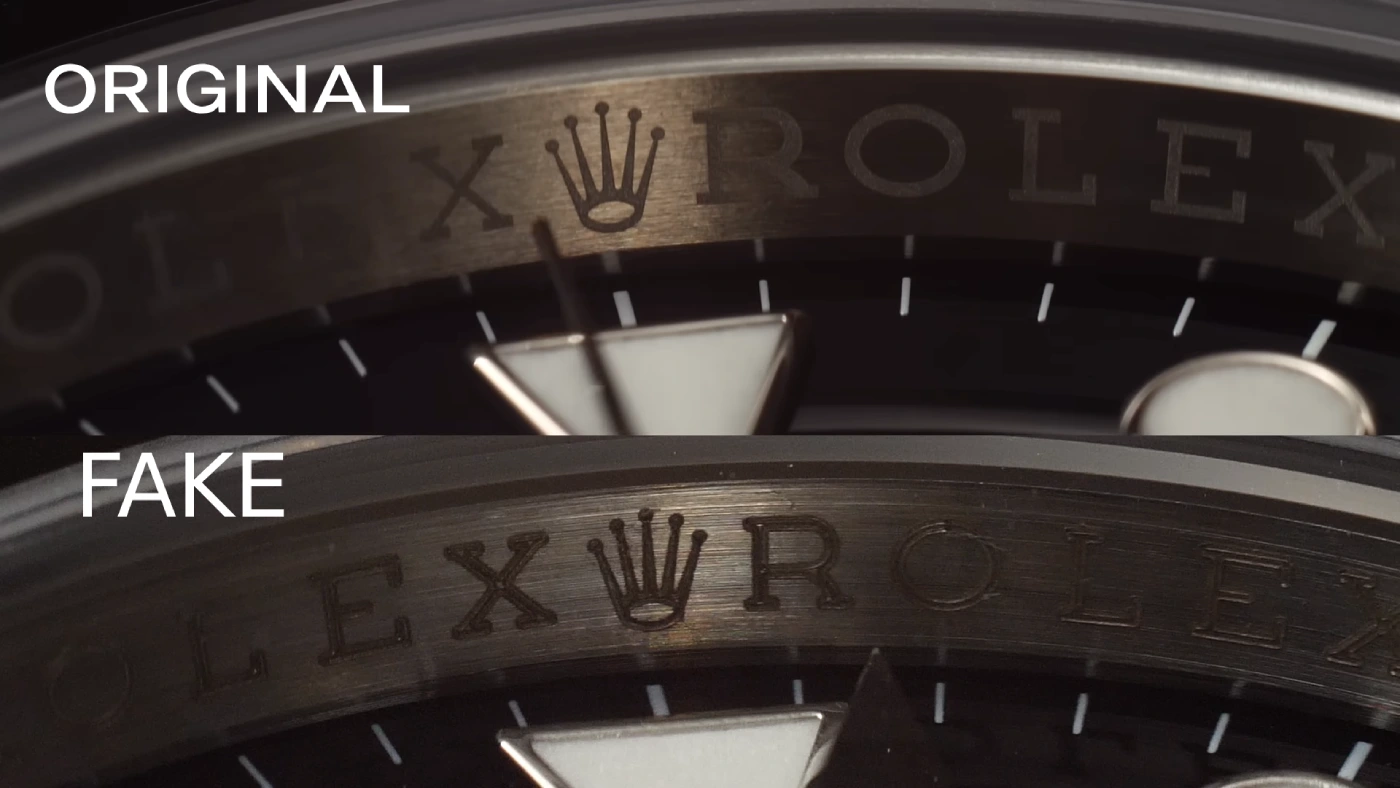

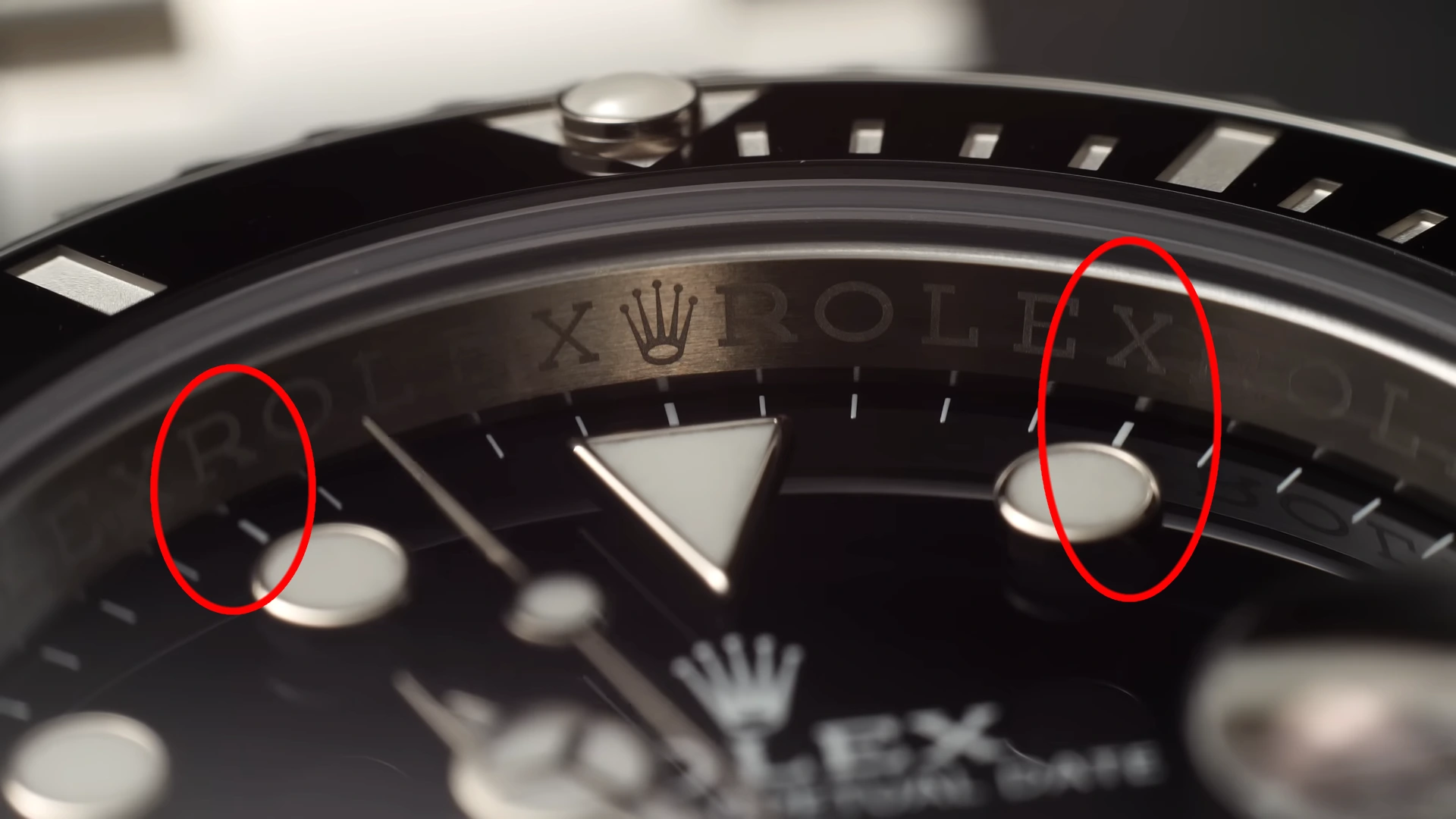
5. Rolex Finishing and Surface Quality
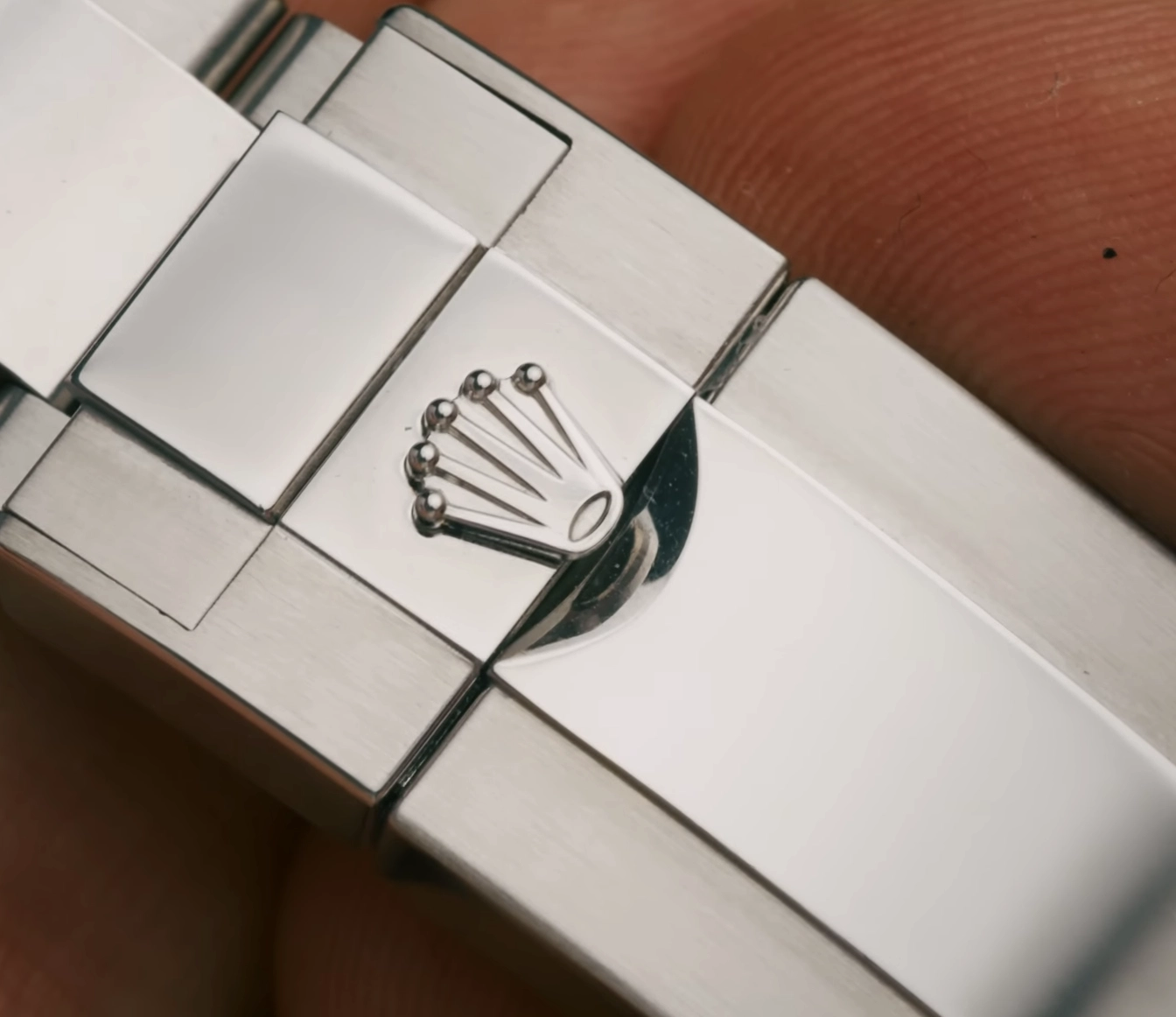
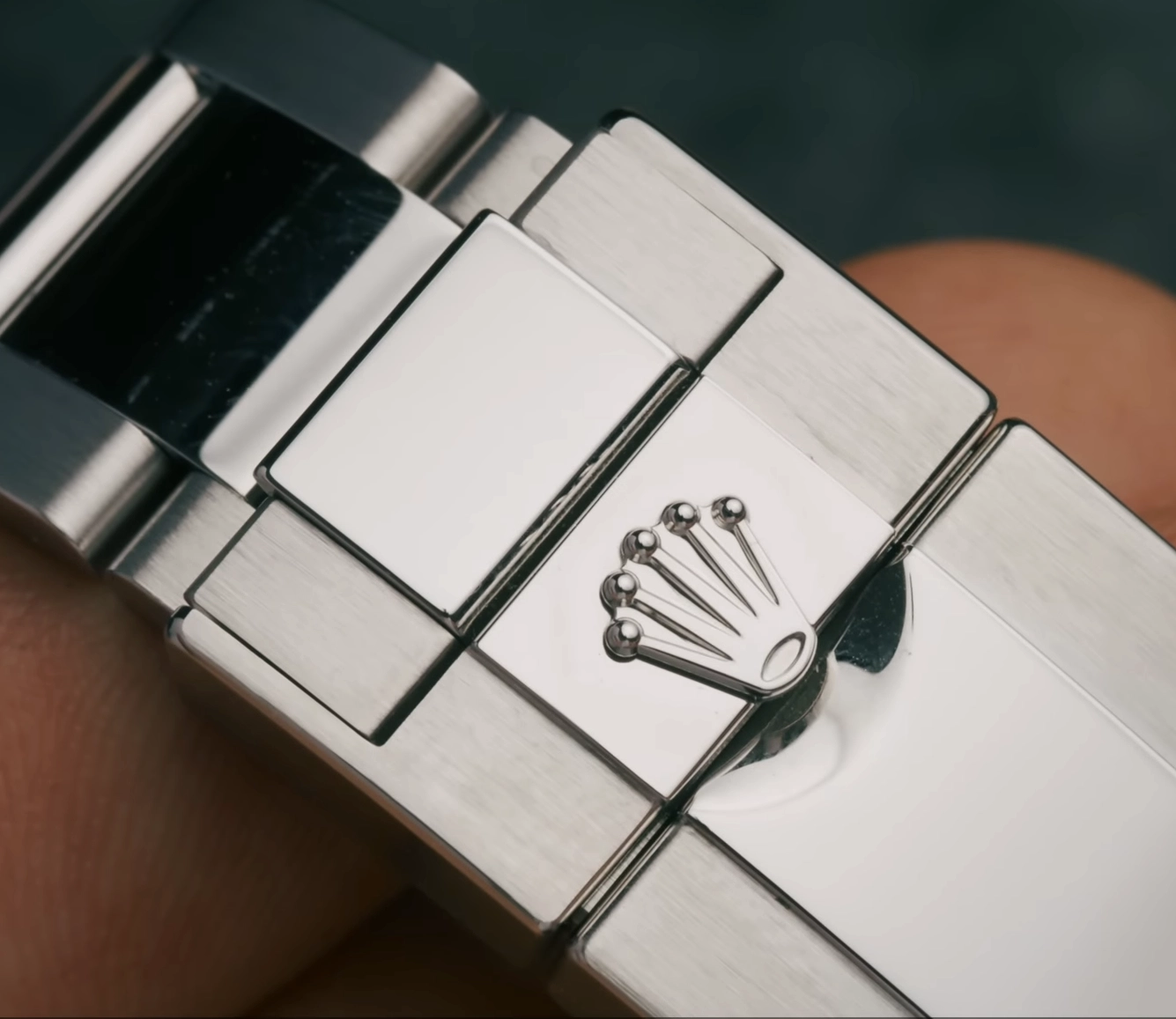
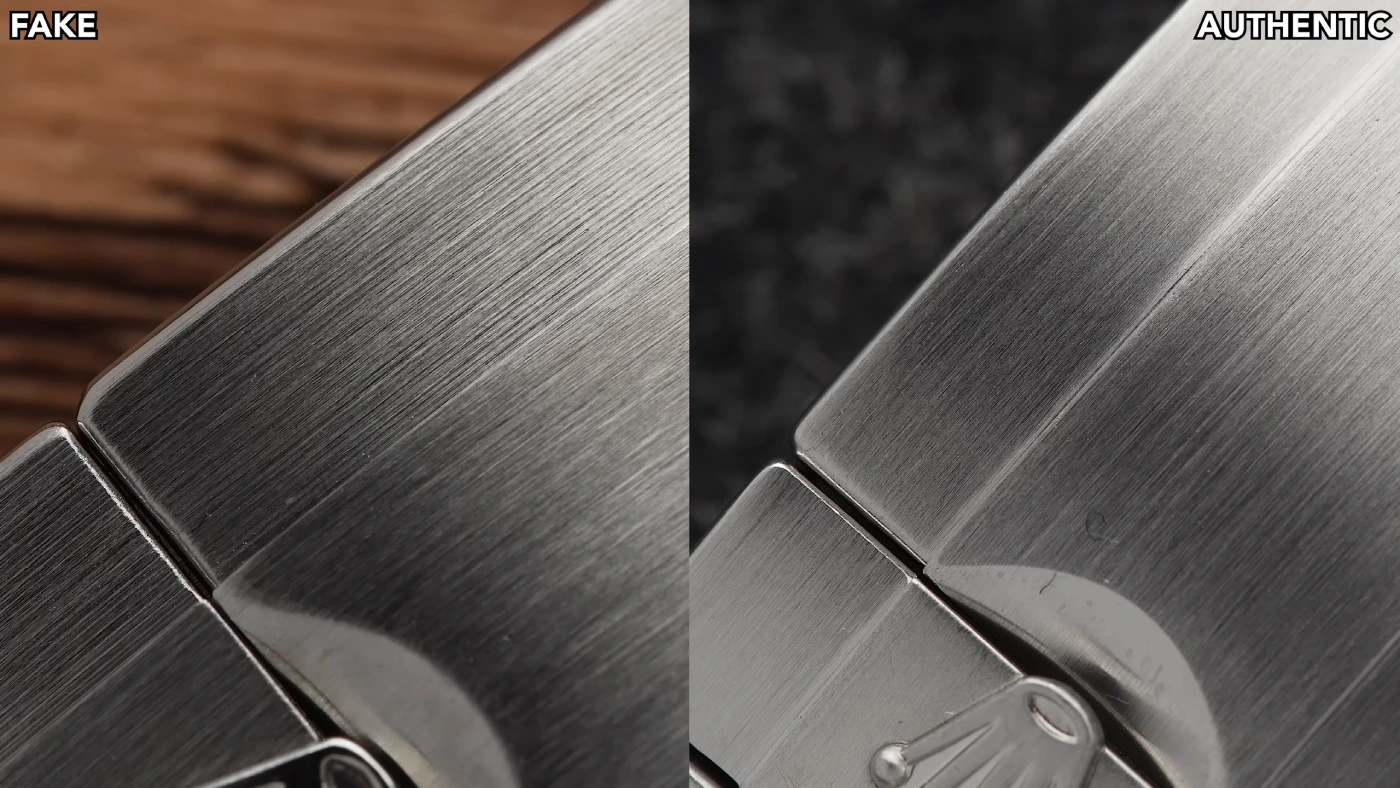
Any watch enthusiast knows that Rolex finishing should be close to impeccable. The brushing on a Rolex Submariner is extremely fine and consistent. Higher-end superclones — which also use 904L steel — come very close, but a trained eye (or a good macro lens) can spot differences in the brushing pattern on the clasp. The thin parallel lines on a genuine Rolex are more uniform. That said, you need a side-by-side comparison with an unworn authentic piece to make this call. A watch that has been worn for a year without polishing will show natural degradation in its surface finish regardless of whether it is genuine.
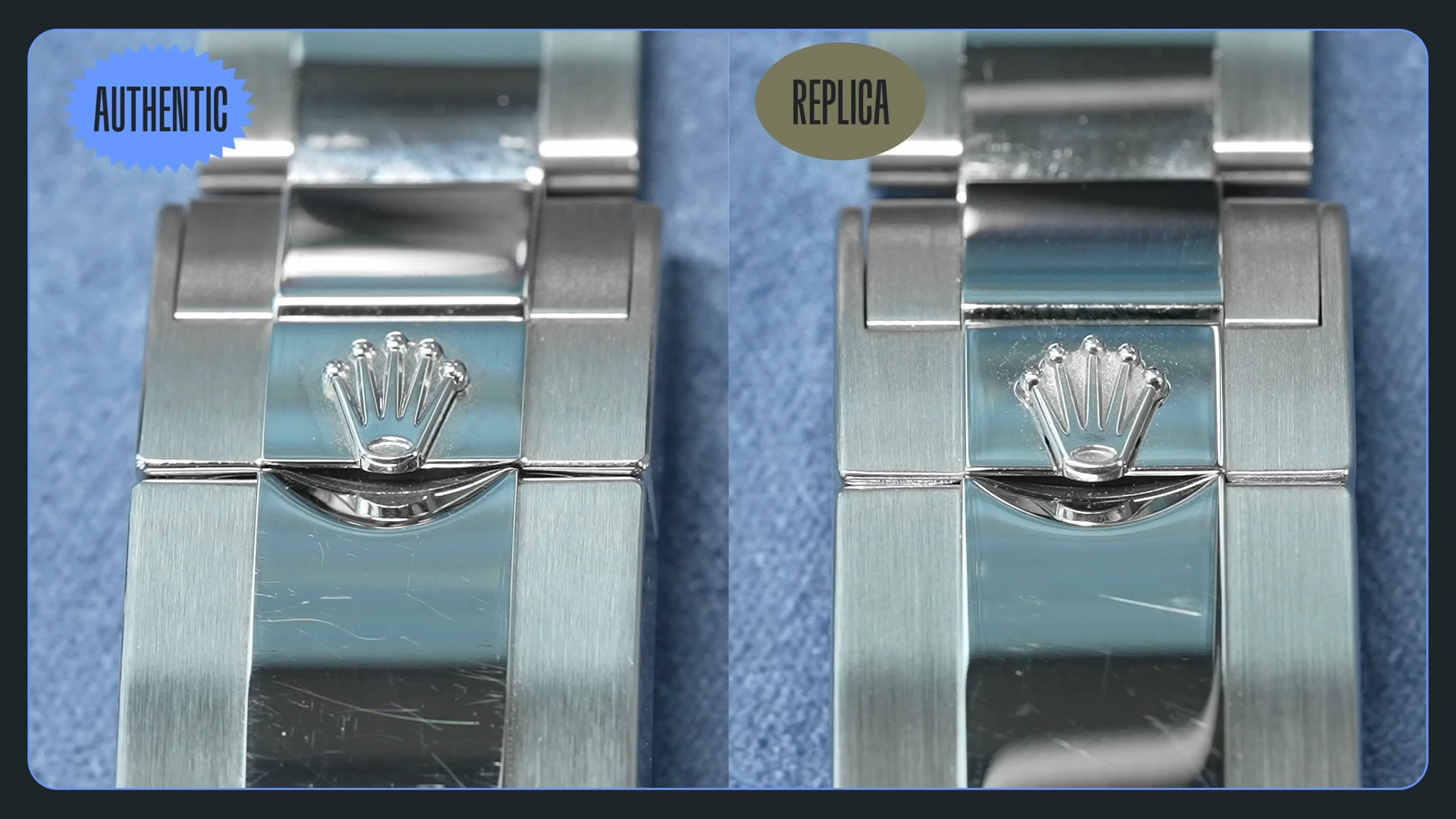
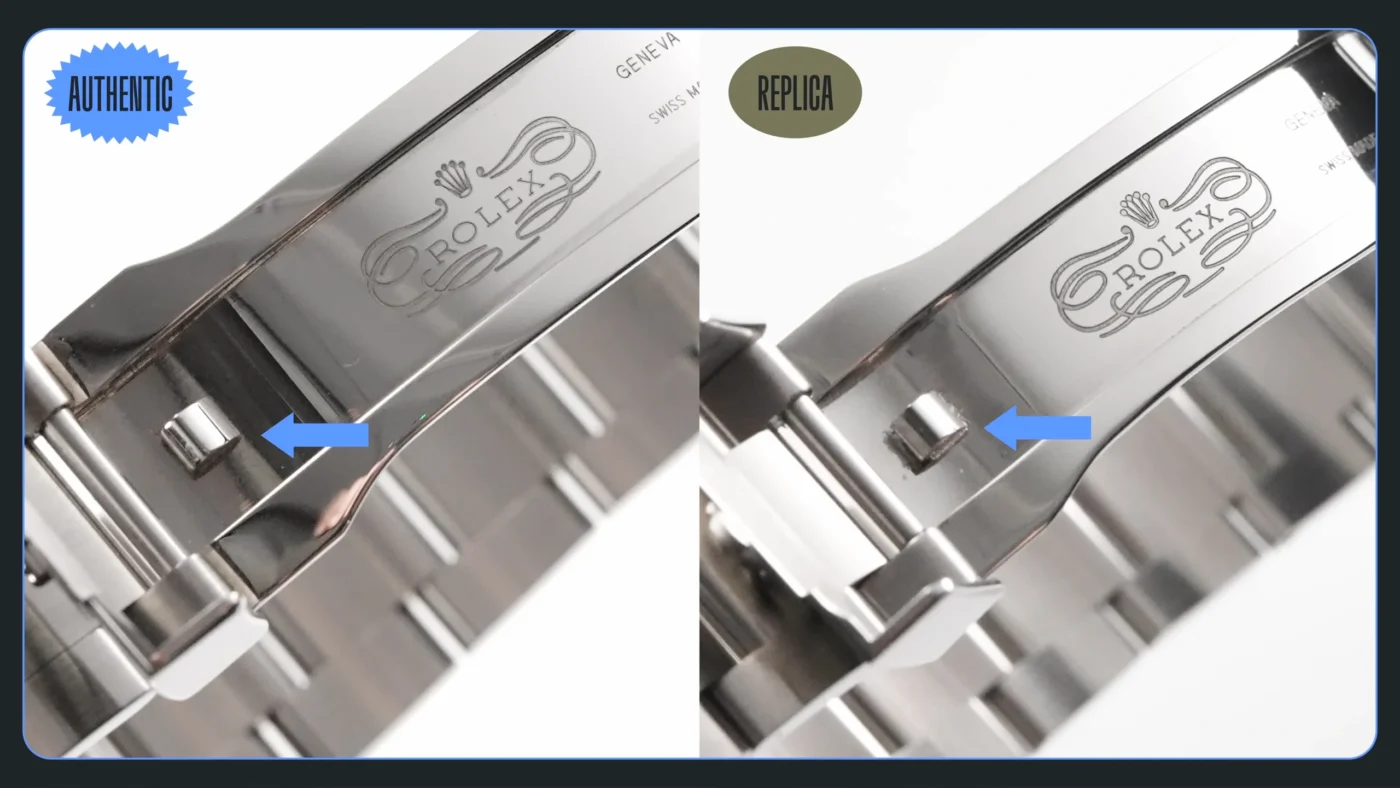
For a broader comparison, here is a buckle shot from an authentic and replica Rolex Daytona.
6. Rolex Movement Inspection
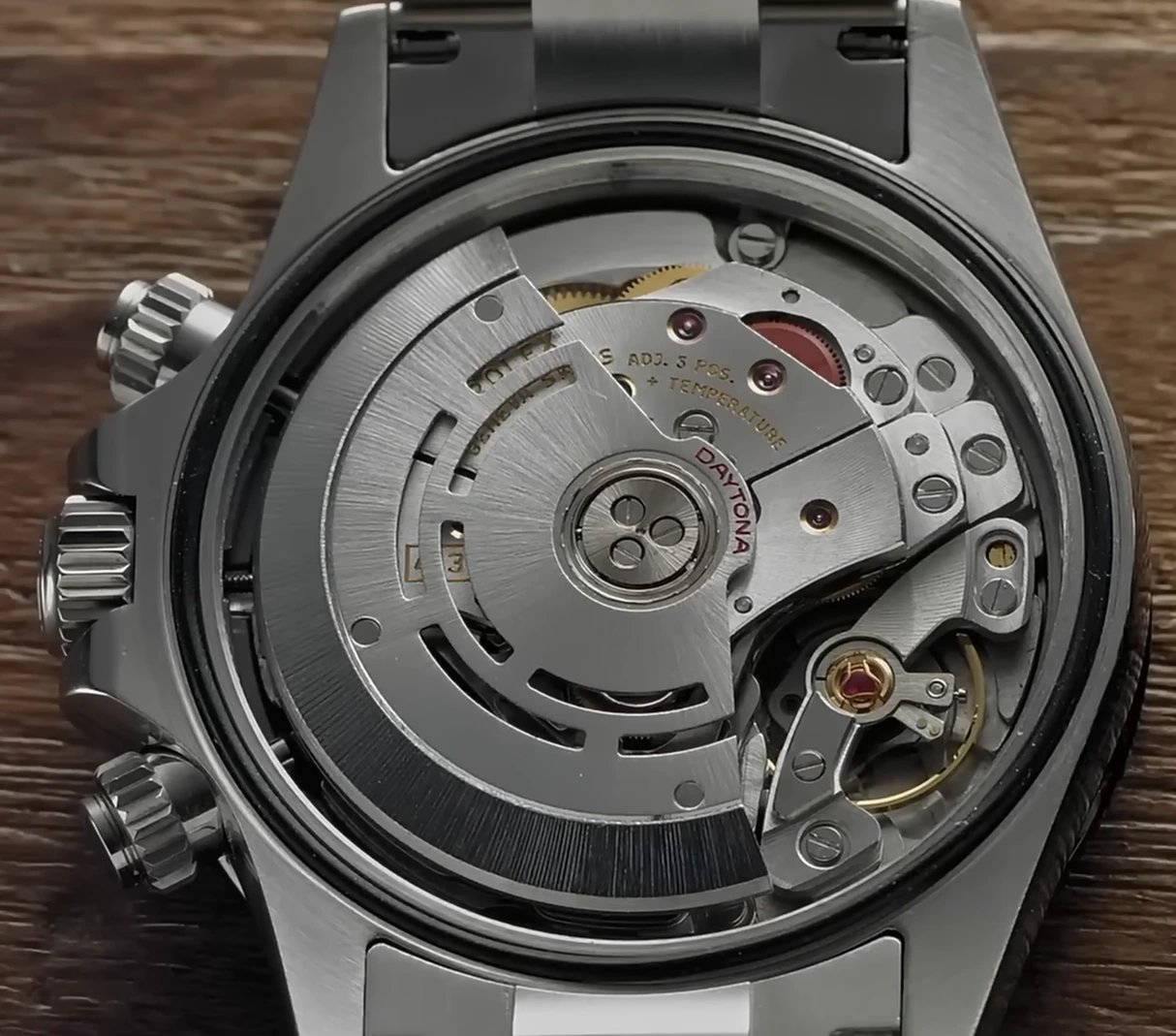
What lies beneath the caseback matters as much as — if not more than — what sits above the dial. Chinese replica factories have invested heavily in reverse-engineering Swiss movements, from ETA workhorses to Rolex’s proprietary calibers. The accuracy varies, as does reliability.
Low-to-mid-tier replicas typically run on Japanese Miyota 8205/8215 movements or their Chinese clone (the 2813), with a decorated rotor designed to mimic the look of a Rolex caliber. Superclones use dedicated clone movements from factories like VS (VS3235, VS3135) and VR (VR3235, VR3135), which replicate the architecture of the genuine Rolex calibers. Some models even use genuine ETA movements — a Swiss-made foundation that Rolex itself built upon in its earlier decades.
Since Rolex watches have closed casebacks, the only way to inspect the movement is by opening the watch — something most buyers will not (and should not) do. That said, a Timegrapher machine can measure the acoustic signature of the movement without opening the case. Genuine Rolex movements have a beat error between 0.0 and 0.1 milliseconds and maintain high amplitude. Clone movements often show detectable jitters and higher beat errors. Authentication specialists reported a 27% rejection rate for watch listings in late 2025, with many of those being watches worth over $10,000, according to industry authentication data.
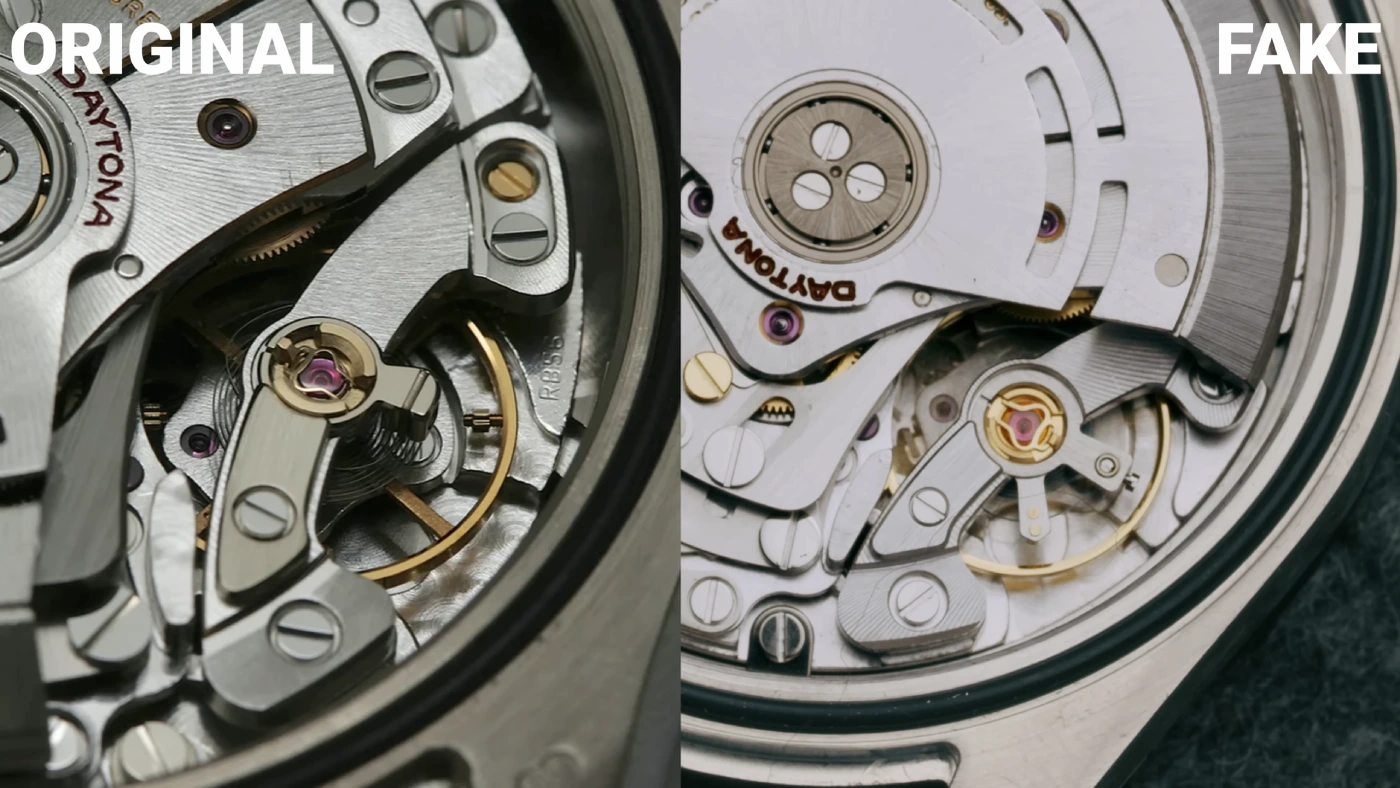
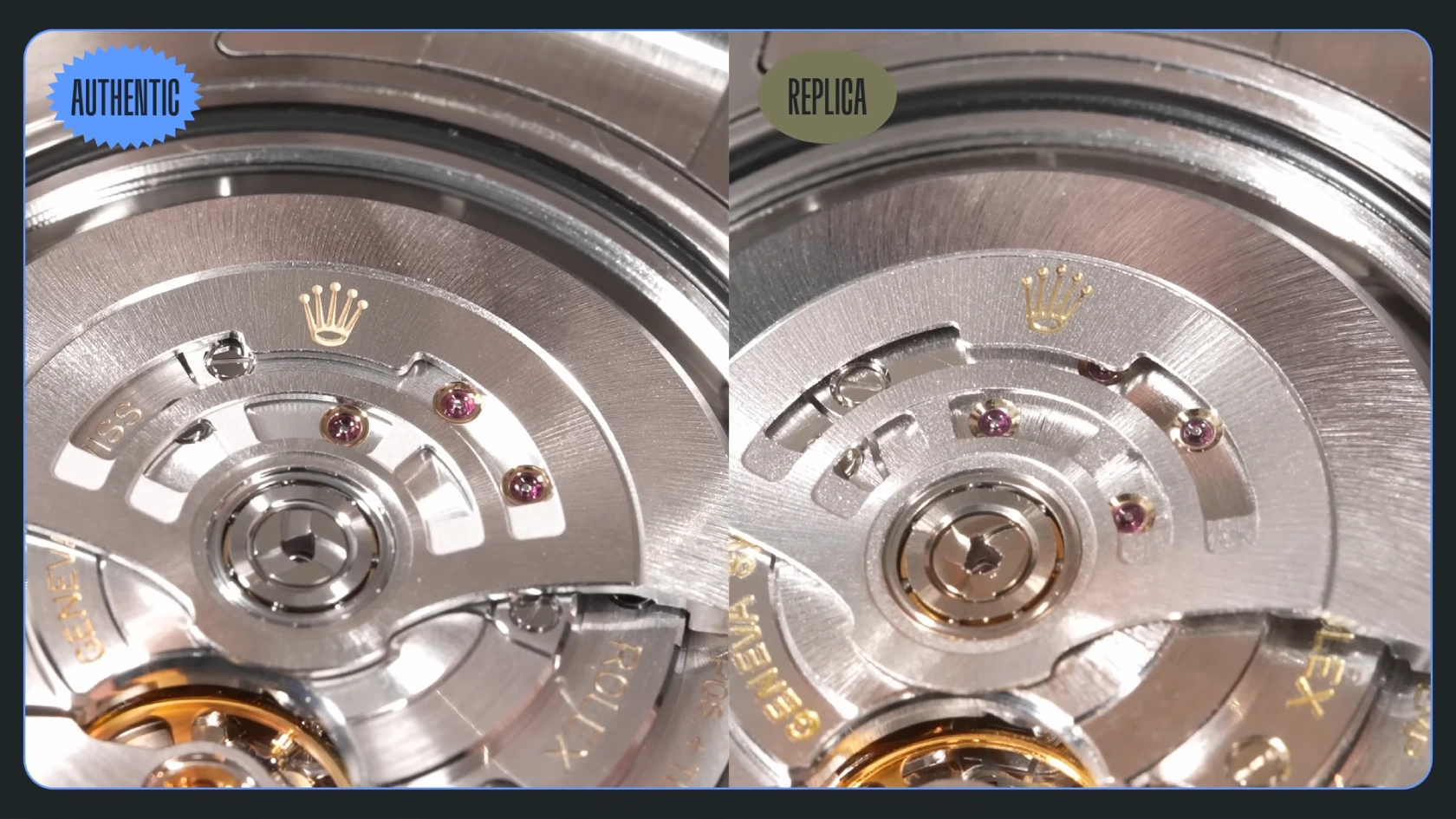
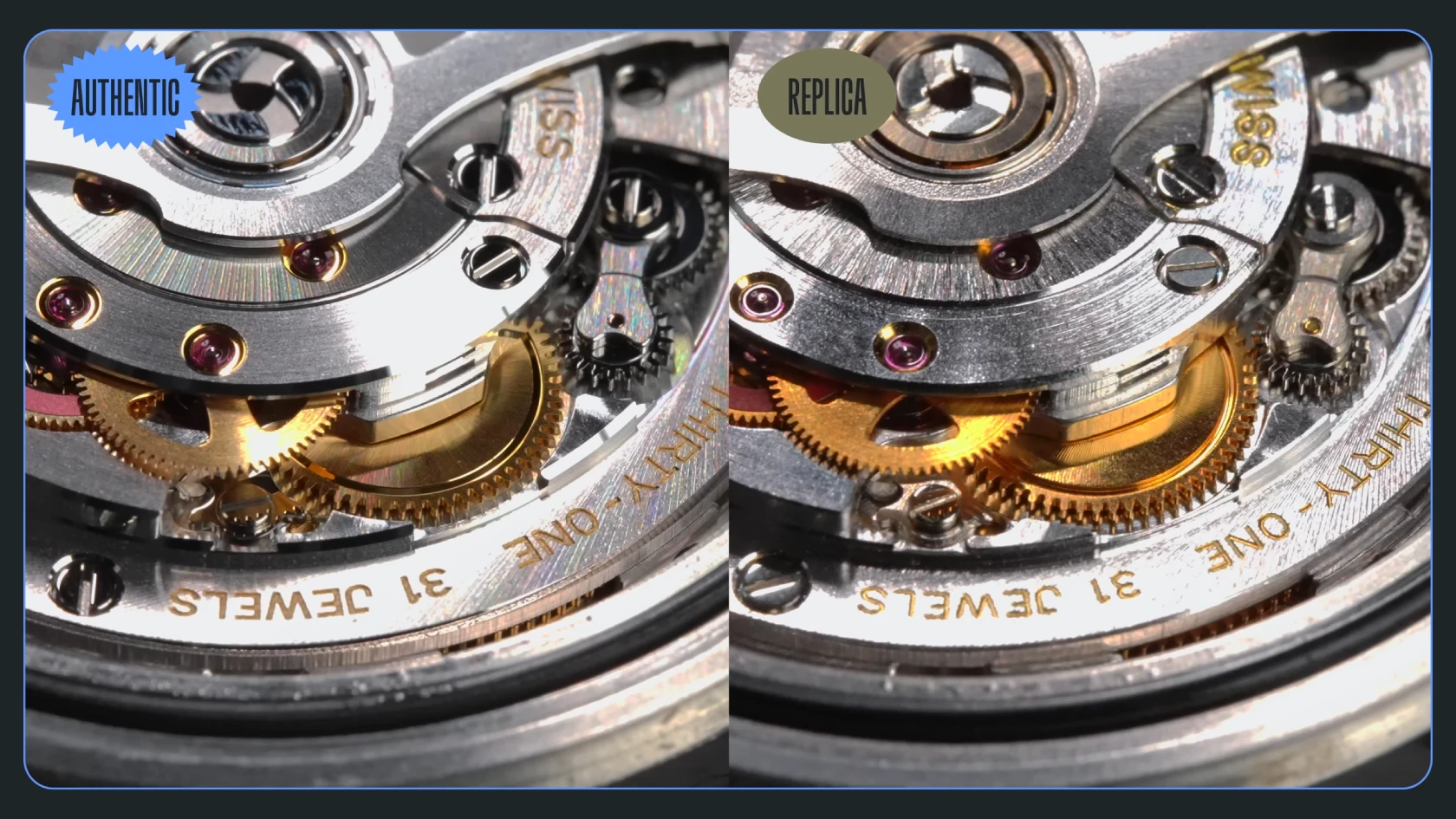
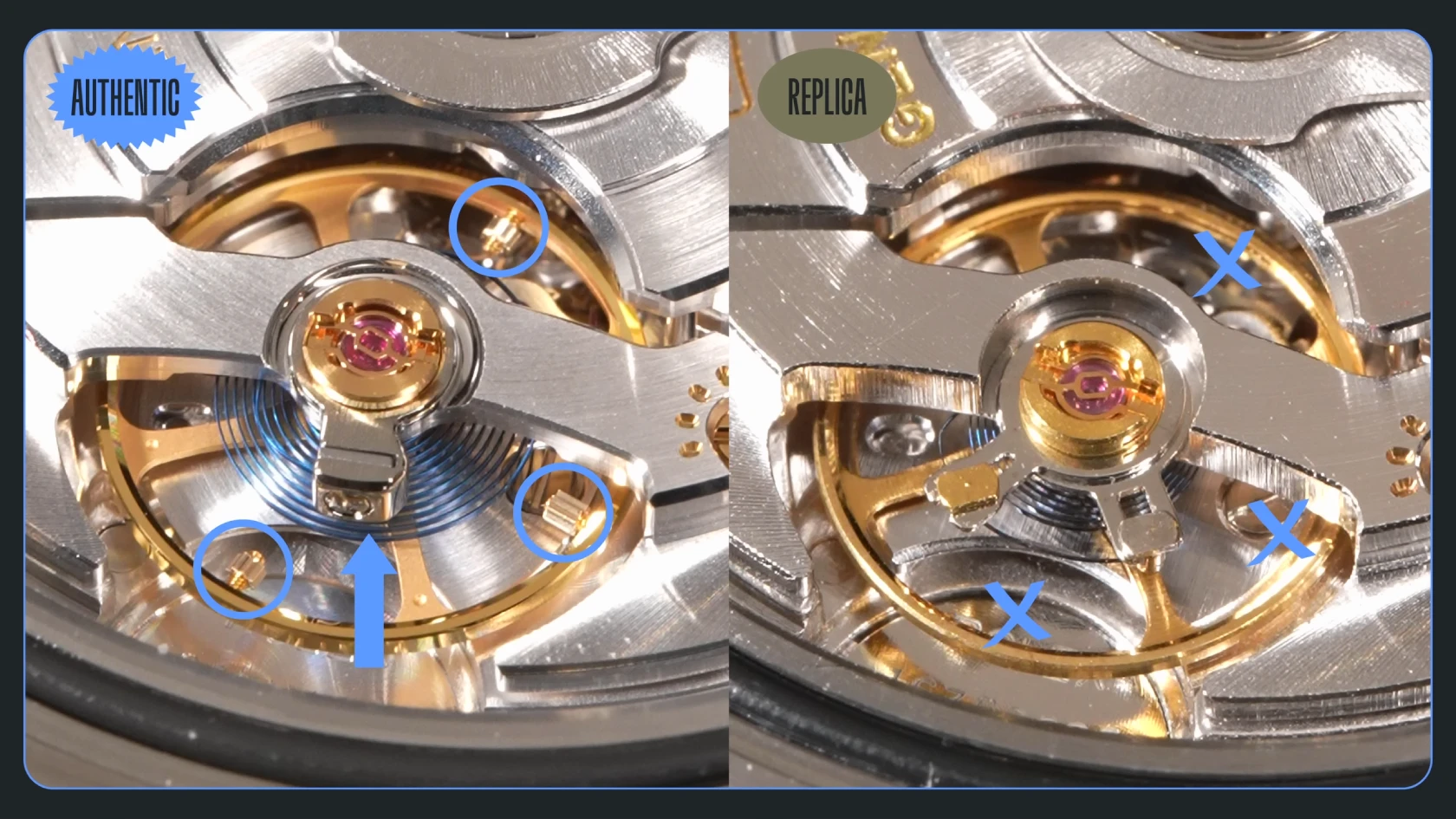
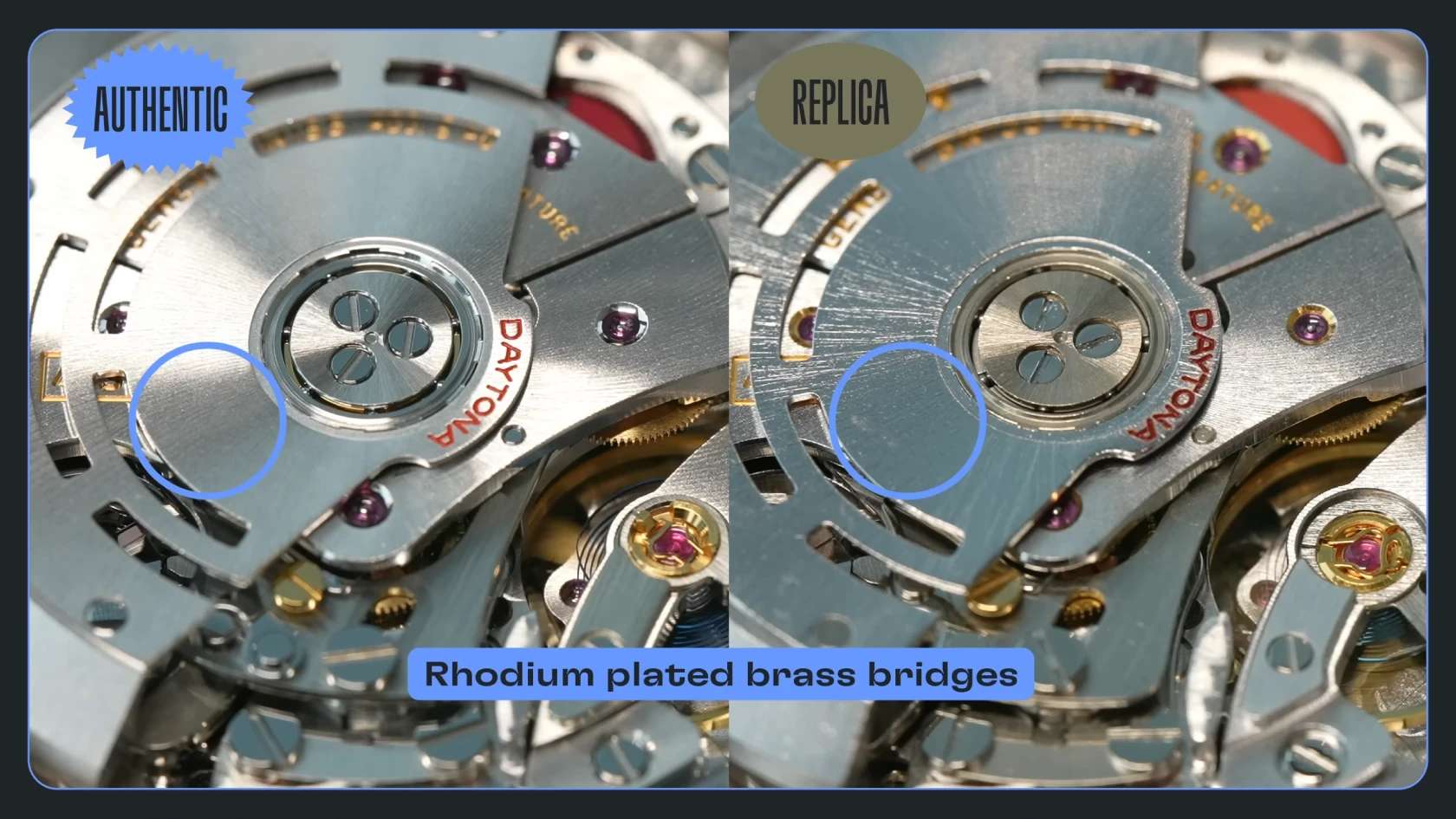
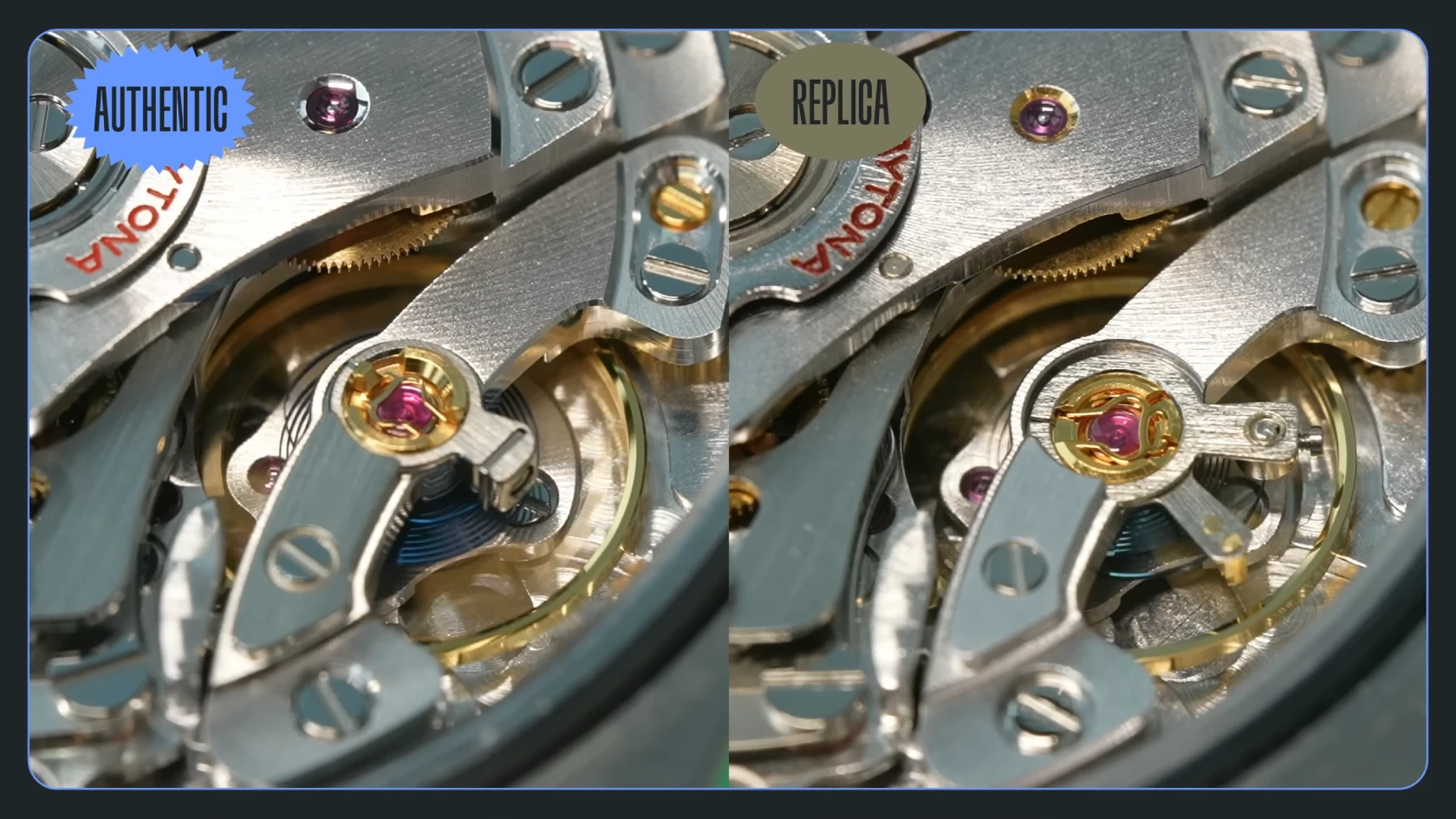
7. Material Quality: 904L Stainless Steel (Oystersteel)
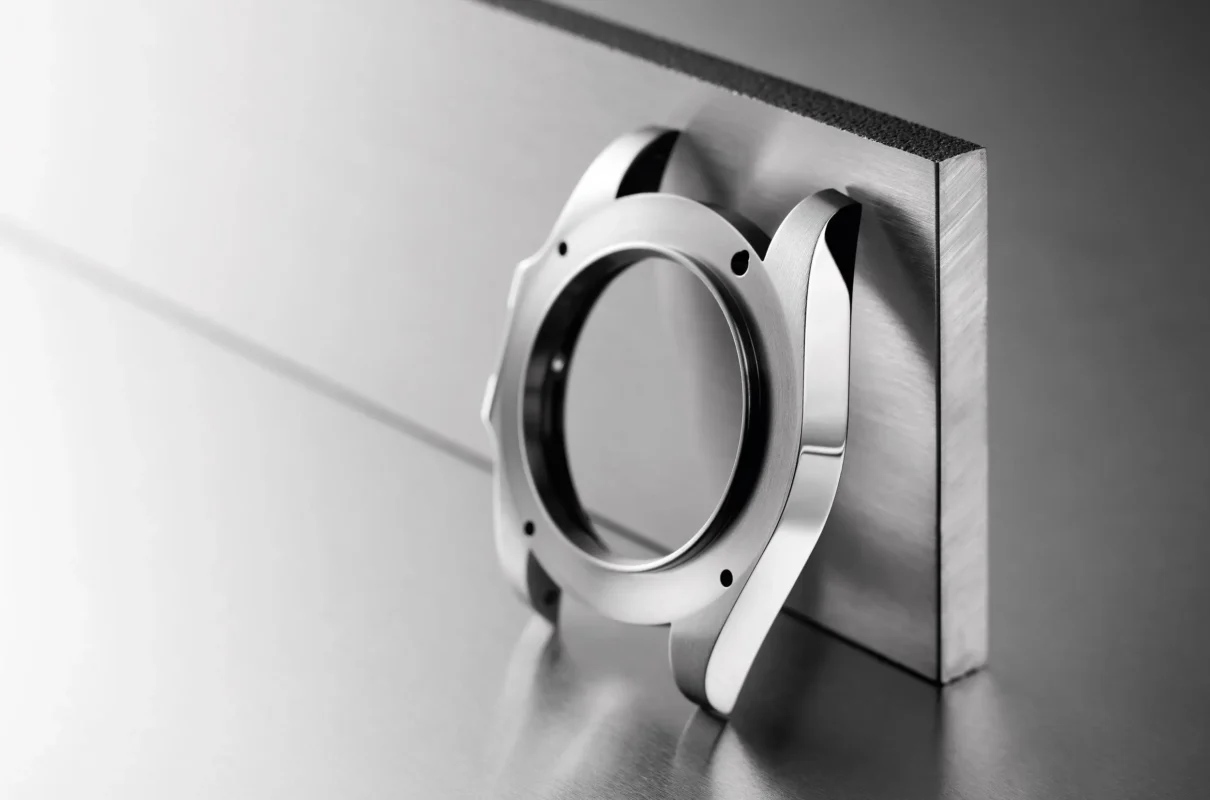
Rolex uses 904L stainless steel — marketed as Oystersteel — across its professional watch line. This is a higher-grade alloy than the 316L steel found in most watches (and in lower-quality counterfeits). According to materials data, 904L offers superior resistance to pitting and crevice corrosion, particularly in chloride-rich environments. It also takes a higher polish, giving genuine Rolex cases a distinctive warm luster that 316L cannot replicate. That said, most modern superclones now use 904L as well, so material testing alone is no longer a reliable discriminator. Where differences still show up is in the finishing: counterfeit 904L sometimes reveals an “orange peel” texture on polished surfaces, particularly on the center links of the bracelet, when viewed under magnification.
8. Clasp Hook Spot Welding
On newer Submariner models, the clasp hook is the only component soldered onto the clasp body. On a genuine Rolex, the spot-welding is immaculate: a series of perfectly spaced weld points with no discoloration. Soldering requires extreme heat, and steel changes color and temper under different temperatures — so any inconsistency in the welding pattern is a tell. This is one of those details that requires magnification and patience, but it is remarkably effective for separating a good fake from the real thing.
9. Weight and Size Differences
Weight and dimensions are a quick first check, but they are no longer the reliable tell they once were. Low-end fakes are noticeably lighter because they use cheaper metals. Superclones, however, match the genuine specifications almost exactly — the difference is often within a gram or two, which can be attributed to glass positioning after service, polishing wear, or the number of bracelet links. In our Rolex Submariner super clone comparison, the weight difference between the superclone and authentic was negligible. One area where weight testing still works is with platinum models: counterfeit platinum Daytonas show an 80-gram weight deficit, and tungsten-weighted fakes produce a dull, thudding sound when the bracelet is handled.
The NFC Warranty Card Scam (2026 Update)
This is arguably the most important new development in Rolex authentication for 2026, and most buyers have never heard of it.
Since 2020, genuine Rolex warranty cards have included an embedded NFC chip. When you tap the card with your phone, it directs you to the official Rolex website via a generic URL — one that contains no serial number. Counterfeiters have weaponized this feature by creating fake NFC cards that link to spoofed websites (for example, “rolex-warranty-check.com”). These fake sites display a fabricated verification page showing your specific watch’s serial number, tricking you into believing the watch has been verified.
Here is the critical rule: if an NFC card tap takes you to a page displaying your specific watch data, the watch is fake. Rolex does not offer online serial number verification. The official card simply links to a general Rolex information page. This scam has become so prevalent that authentication specialists now consider the NFC card behavior a primary screening tool. More details on this trend are documented by ECI Jewelers’ authentication guide.
Caseback Engravings and the “Clear Caseback” Red Flag
Most Rolex models — including the entire Sky-Dweller, Submariner, and Daytona lines — feature a smooth, completely plain caseback with no engravings whatsoever. The exceptions are specific models like the Daytona Le Mans reference 126529LN, which has a commemorative engraving, and vintage models with original factory markings. If you encounter a Rolex with an exhibition (clear) caseback and it is not a specific known reference, that is an immediate red flag. Counterfeiters love exhibition casebacks because it lets them show off the decorated movement inside — but Rolex almost never uses them.
On precious metal models, check the hallmarks between the lugs. Genuine Rolex hallmarks are crisp, deep, and perfectly struck. Counterfeits often show blurry or shallow stamps.
Bezel Action: The Click Test
On diver models like the Submariner and Deepsea, the unidirectional bezel should rotate with 120 distinct, firm clicks. Each click should feel identical in resistance and produce a clear, mechanical sound. Counterfeit bezels often feel mushy, have fewer clicks, or rotate too freely. The bezel insert itself is another checkpoint: genuine GMT-Master II Batman and Pepsi models use a ceramic insert with chemically bonded color that has a specific depth and richness. Counterfeiters have gotten close, but they still cannot match the exact chemical composition of the genuine ceramic — particularly the red portion of the Pepsi bezel, which has a distinctive warmth that copies lack.
The “Floating m” and Other Model-Specific Tells
Beyond the universal checks, certain Rolex models have specific tells that counterfeiters consistently get wrong. On counterfeit Submariners, look for the “floating m” — the letter “m” in “300m” on the dial sits slightly higher than it should relative to the other text. On fake GMT-Master II models, the hand stack order (the sequence of the hour, GMT, and minute hands) is often wrong. On Datejust fakes, the cyclops magnification and date font spacing remain common weak points.
These model-specific flaws are exactly why seasoned collectors often authenticate a watch by its reference number first, then apply the tells unique to that model. Our Rolex Reference Number Guide breaks down every code so you know which model you are looking at before you start checking details.
Box and Papers: The Complete Package Check
Authentication does not stop at the watch. The box, warranty card, manual, and hangtags all carry verification points. Genuine Rolex boxes have a specific weight, hinge mechanism, and interior velvet quality that counterfeiters rarely replicate accurately. The warranty card should match the watch’s serial number exactly, and as we covered above, the NFC behavior should link only to a generic Rolex page.
Manuals should be printed on specific paper stock with precise typography. Hangtags include model and serial reference numbers that must match the watch. One of the most common mistakes counterfeiters make is pairing an otherwise convincing watch with generic or mismatched accessories — a dead giveaway to anyone checking the complete package.
AI-Powered Authentication Tools in 2026
A new frontier has opened up in the authentication arms race. Several companies now offer AI-powered authentication services that analyze photos of a watch to identify counterfeit indicators. These tools use machine learning models trained on thousands of genuine and fake examples to spot patterns invisible to human inspectors. While they are not infallible — and should not be the sole basis for a purchasing decision — they add an extra layer of screening that is particularly useful for online purchases. According to Luxury Watches USA’s buyer guide, combining visual AI checks with physical inspection remains the gold standard for 2026.
Franken Rolex: When Parts Get Mixed
For those who want to push beyond the 97% accuracy that the best superclones achieve, there are Franken watches. These are replica watches with their “flawed” parts replaced with genuine Rolex components. A typical Franken build might combine an authentic dial, hands, and crystal with a high-quality replica case and cloned movement. These hybrids pass almost every visual inspection and can even fool some professional authenticators during a quick assessment.
There is no Franken Rolex store — each build requires individual assessment, sourcing of genuine parts (which is itself legally murky), and watchmaking expertise to assemble. The market for this is small because most people are already satisfied with the quality of top-tier superclones. It takes a very skilled watchmaker with specialized equipment to detect a well-built Franken piece.
Here is another YouTube video from an authentication specialist showing how professional dealers check Rolex watches in 2025 — the techniques apply directly to 2026 models:
A Brief History of Rolex Counterfeiting
Counterfeit Rolex watches have existed almost as long as the brand itself. In the 1980s, fake Rolexes flooded tourist markets from Bangkok to Canal Street — quartz-powered, lightweight, and obvious to anyone who had ever held the real thing. They were novelty items more than serious copies. The turning point came in the early 2000s, when Chinese manufacturing capabilities reached a level where producing convincing replicas became technically feasible. By the 2010s, factories in Guangzhou were churning out copies that could fool casual observers. The 2020s brought the superclone era: dedicated clone movements, 904L steel construction, and dimensional accuracy measured in fractions of a millimeter. You can read more about this evolution in our History of Replica Rolex Watches article.
What makes the current moment unique is the scale and sophistication. According to industry reviews, top factories like VSF and Clean Factory operate with a level of precision engineering that would have seemed impossible 15 years ago. They invest in the same CAD software, the same metallurgical testing, and the same quality control processes as legitimate manufacturers. The gap between genuine and best-copy has never been narrower.
Find Your Perfect Replica Rolex
Whether you are studying authentication to protect yourself as a buyer, or you simply appreciate the craftsmanship of a well-made replica, the landscape in 2026 is more complex — and more interesting — than ever before. The superclone factories continue to raise their game, while Rolex adds new security features to stay ahead. It is an arms race that benefits anyone who cares about the details.
Browse our full catalog of replica Rolex watches — from entry-level to Superclone grade. For beginners, our starter guide covers everything you need to know. And if you want to explore the full range of Rolex collections and what makes each one special, check out our 12 Iconic Rolex Models overview.
Frequently Asked Questions
Can a jeweler tell if a Rolex is fake?
Most jewelers can spot a low-to-mid-tier fake immediately. Superclones are a different story. A jeweler without specialized equipment — a Timegrapher, a macro lens, or experience with the specific clone movement anomalies — may not be able to tell a high-end superclone from genuine during a quick visual inspection. The most reliable method remains opening the case and inspecting the movement.
What is the most reliable way to authenticate a Rolex?
Movement inspection with a Timegrapher machine is the gold standard. Genuine Rolex movements have a beat error between 0.0 and 0.1 milliseconds. Clone movements show higher beat errors and lower amplitude. For buyers who cannot access a Timegrapher, the NFC warranty card test (described above) is a strong secondary check.
Are superclone Rolex watches illegal to buy?
Laws vary by jurisdiction. In most countries, purchasing a replica watch for personal use is not a criminal offense, though selling counterfeit goods that infringe on trademarks is illegal. We advise checking your local regulations and, more importantly, never misrepresenting a replica as genuine.
Do fake Rolex watches have the same weight as real ones?
Low-end fakes are noticeably lighter. Superclones match the weight within a gram or two, making weight testing unreliable for high-end copies. The exception is platinum models, where counterfeits show significant weight deficits due to the density difference between genuine platinum and the substitutes used in fakes.
What year did Rolex start laser-etching the crown on the crystal?
Rolex began laser-etching the microscopic crown logo at the 6 o’clock position on the sapphire crystal in 2001. Any Rolex purporting to be older than 2001 should not have this feature — its presence on a watch from the 1990s would be a clear authentication red flag.
Can you verify a Rolex serial number online?
No. Rolex does not offer an online serial number verification tool. Any website claiming to verify your serial number is either a third-party database (which may be incomplete or inaccurate) or a counterfeit operation designed to “authenticate” fake watches. The NFC warranty card should link only to a generic Rolex webpage with no serial-specific data.
Is there a submariner date with a white dial/face made in a replica super clone ?
no submariner is made with a white face