

Articles
Rolex Reference Number Guide: Understand Every Code
Feb
So you’ve decided to buy a Rolex watch – Congratulations! That means you’re either about to join the Rolex owners club or move one step closer as an existing member adding to your collection.
That’s where this guide comes in. Below, we’ll break down the structure of modern Rolex reference numbers and explain what all those letters and digits mean – from model families to bezel types, case materials, and color indicators.
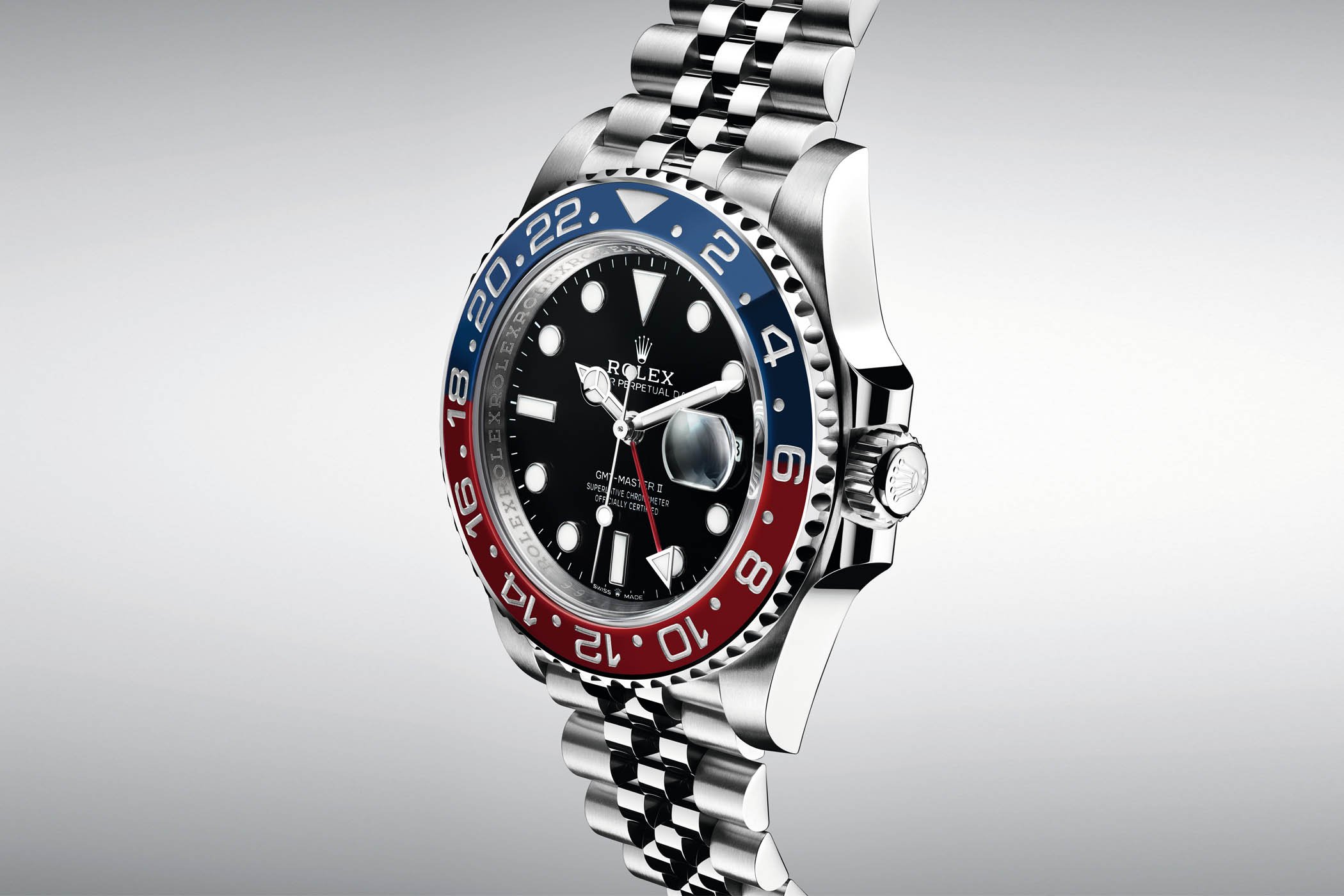
Let’s start with a popular example: 126710BLRO. If that looks familiar, it’s the current Rolex GMT-Master II with the red and blue “Pepsi” Cerachrom bezel, black dial, and typically a Jubilee bracelet – one of the most recognizable models in Rolex’s lineup.
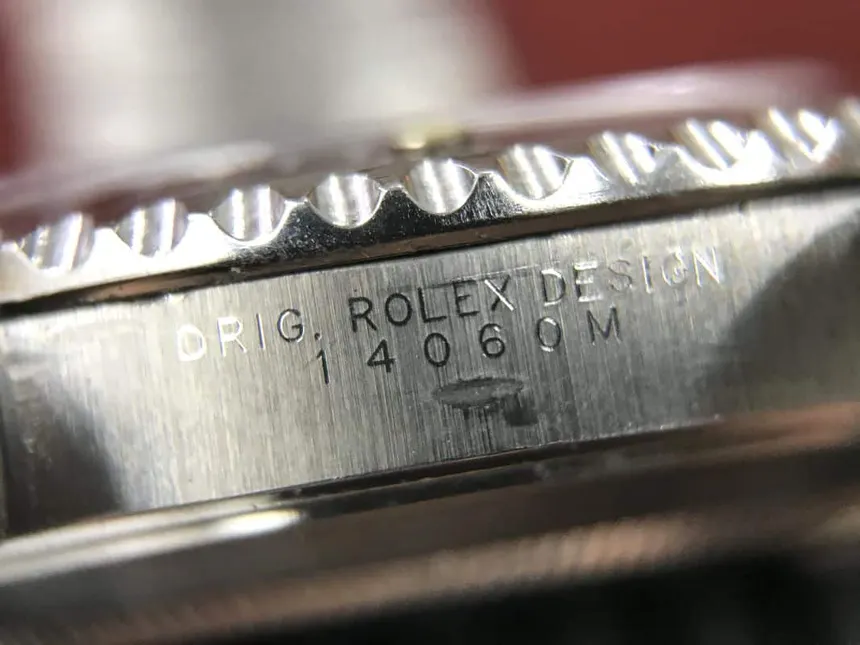
That wasn’t always the case. Earlier Rolex models often used just four digits, like the legendary GMT-Master 1675, a favorite among vintage collectors. These shorter references were common until Rolex transitioned to longer formats, with five digits appearing mid-century and six-digit codes becoming standard since the early 2000s.
Today, most modern references – like 126710BLRO – consist of six digits plus suffix letters to specify features such as bezel color or insert material. So, what do those numbers and letters actually mean? Let’s break it down.
Rolex Model Codes
The vast majority of modern Rolex reference numbers begin with a “1” or “2.” The leading digit often hints at the generation or update cycle, though it’s not a strict rule. Rolex has gradually shifted many collections toward starting with “2” for newer iterations, while lines like the Sky-Dweller, Pearlmaster, and certain others follow distinct patterns.
More consistently, the following three digits identify the watch’s core model family. Rolex has never published an official list, but decades of collector observation have established reliable patterns. Here’s a quick reference for common modern six-digit families:
- 124 → Explorer
- 126 / 116 → Datejust (various sizes)
- 140 → Submariner (no-date, older or specific)
- 166 → Submariner Date (earlier five-digit era)
- 168 → Submariner Date (precious metals variants)
- 165 → Explorer II or Daytona (distinguished by prefix)
- 167 → GMT-Master / GMT-Master II
- 214 → Milgauss
- 226 → Sea-Dweller / Deepsea
- 326 → Sky-Dweller
Note that some codes overlap, like “165” for both Explorer II (often prefixed with “2,” e.g., 216570) and Daytona (prefixed with “1,” e.g., 116500 or current 126500). The prefix helps differentiate them.
Family codes can evolve with updates or vary slightly by material and size, but the list above covers the most commonly encountered in current and recent production.
Rolex Bezel Codes
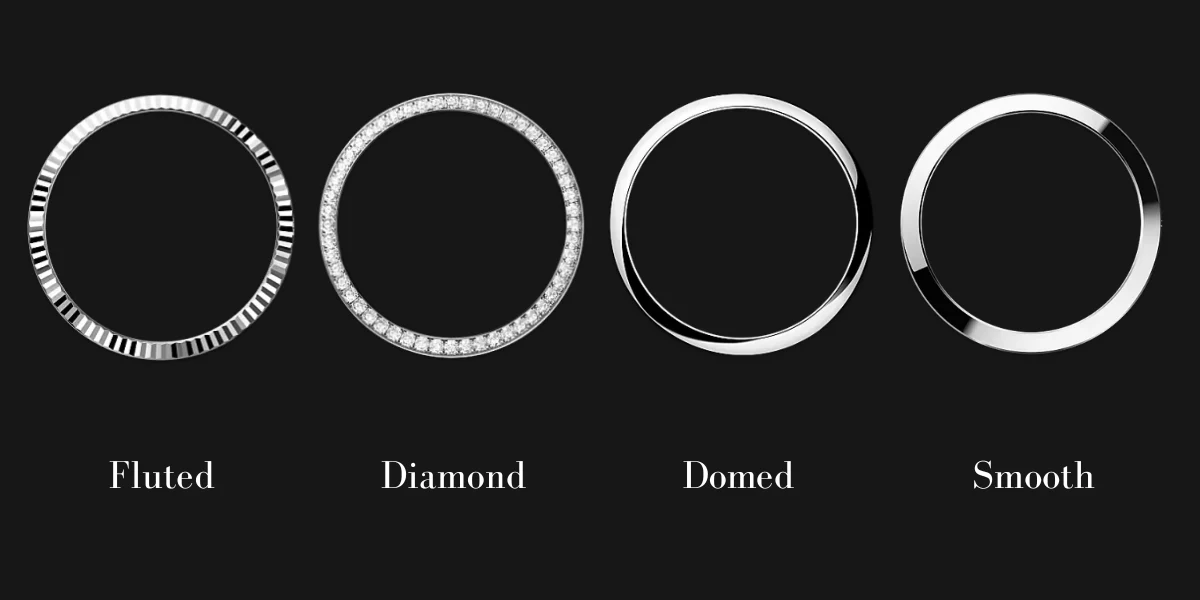
The fifth digit in a six-digit reference typically indicates the bezel type. While not every model follows this exactly (dress watches vary), tool watches and many others use these conventions:
- 0 → Smooth or domed bezel
- 1 → Rotating bezel (e.g., dive or GMT styles)
- 2 → Engraved bezel
- 3 → Fluted bezel (common on Datejust)
- 4 → Gem-set or bark-finish bezel
- 6 → Rotating bezel (alternative or updated)
Rolex Metal Codes
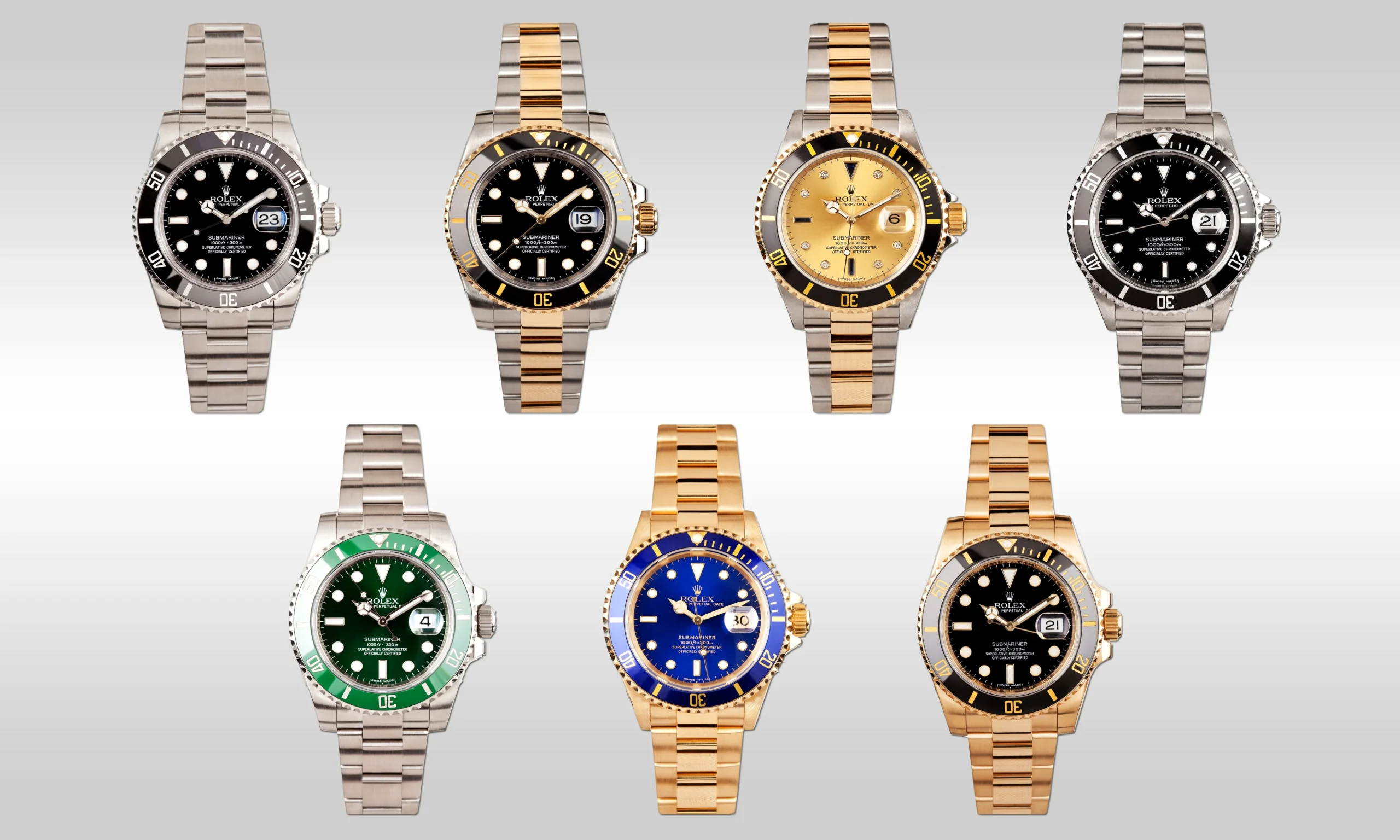
The final digit before any suffix letters denotes the primary material of the case and bracelet:
- 0 → Stainless steel (Oystersteel)
- 1 → Everose Rolesor (stainless steel + Everose gold)
- 2 → Rolesium (stainless steel + platinum)
- 3 → Yellow Rolesor (stainless steel + yellow gold)
- 4 → White Rolesor (stainless steel + white gold)
- 5 → Everose gold (full)
- 6 → Platinum
- 8 → Yellow gold (full)
- 9 → White gold (full)
Understanding the Letters in Rolex Reference Numbers
The suffix letters in modern references are abbreviations derived from French words – fitting for a Geneva-based company where French is the official language. Knowing a handful of color and component terms makes them straightforward:
- Bleu → Blue
- Noir → Black
- Rouge → Red
- Vert → Green
- Jaune → Yellow
- Chocolat → Chocolate (brown)
- Lunette → Bezel
- Glace → Crystal (window)
Common Rolex Letter Codes
Here are the most frequently seen suffixes and their meanings:
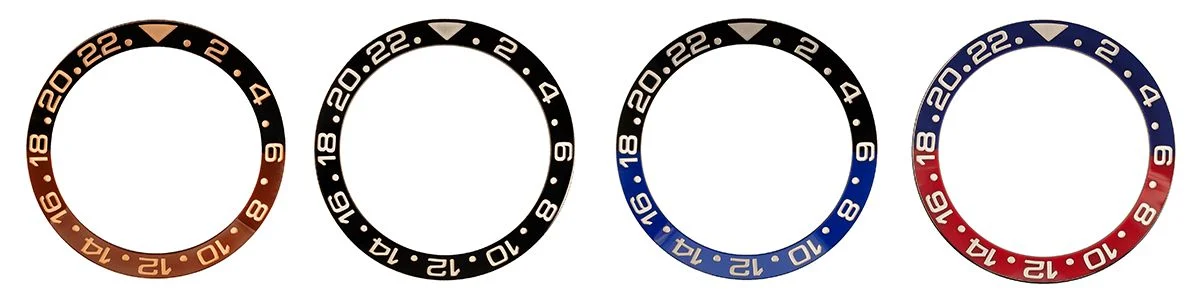
- BLRO → Bleu/Rouge → Blue and red bezel (GMT-Master II “Pepsi”)
- BLNR → Bleu/Noir → Blue and black bezel (GMT-Master II “Batman”)
- CHNR → Chocolat/Noir → Brown and black bezel (GMT-Master II “Root Beer”)
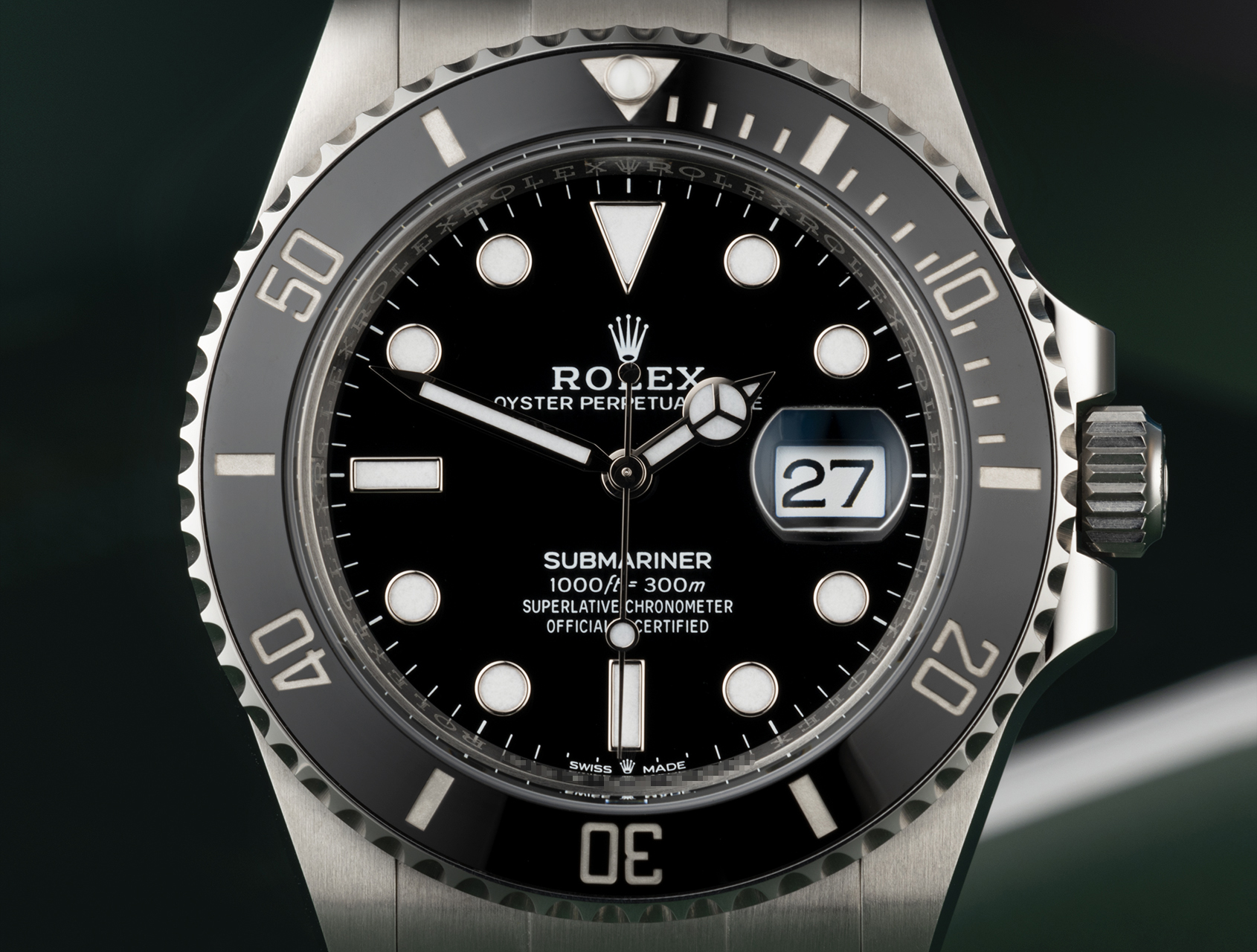
- LN → Lunette Noir → Black bezel (e.g., Submariner 126610LN, GMT older 116710LN)
- LV → Lunette Verte → Green bezel (e.g., Submariner “Starbucks” 126610LV)
- LB → Lunette Bleu → Blue bezel (e.g., Submariner 126619LB)
- GV → Glace Verte → Green sapphire crystal (e.g., Milgauss 116400GV)
Gem-Set Rolex Watch Codes
Gem-set references often use more elaborate letter combinations, typically on exclusive or limited models like certain Day-Dates, Pearlmasters, or Daytonas. These codes appear less frequently but are useful for vintage or high-end pre-owned searches:
- TBR → Tessellate Brillants → Diamond-set
- TEM → Tessellate Émeraude → Emerald-set
- SABR → Saphirs, Brillants → Sapphires & diamonds
- SANR → Saphirs Noir → Black sapphires
- SARU → Saphirs, Rubis → Sapphires & rubies
Making Sense of Rolex References
Once you understand the system, decoding a reference becomes second nature. A number like 126610LN breaks down as: 1266 (Submariner Date family), 1 (rotating bezel), 0 (stainless steel), LN (black bezel).
Whether you’re reading a modern six-digit code or spotting a gem-set suffix, the logic is consistent. For official current models and collections, check rolex.com. For deeper serial dating and reference cross-checks, reliable resources like Bob’s Watches provide helpful tools.
Frequently Asked Questions
- Why do modern Rolex references have six digits while older ones have four?
Rolex gradually lengthened reference numbers to include more specific information about bezel type, material, and updates. Four-digit references were standard through much of the 20th century; five-digit codes appeared mid-century, and six-digit references became the norm starting in the early 2000s. - What does the first digit (1 or 2) in a modern Rolex reference usually mean?
It often indicates the generation or major update cycle. Many collections transitioned from “1” prefixed references (e.g., 116xxx) to “2” prefixed ones (e.g., 126xxx) during the 2010s and 2020s, though the change is not universal across all lines. - How do I tell the difference between a Daytona and an Explorer II when both use the 165 family code?
Look at the prefix. Explorer II references typically start with “2” (e.g., 216570), while Daytona references start with “1” (e.g., 116500 or current 126500). The prefix is the key differentiator. - What does the suffix “LN” stand for on models like the Submariner 126610LN?
“LN” is short for “Lunette Noir” (French for “black bezel”). It indicates a black Cerachrom ceramic bezel insert, one of the most common configurations on modern steel tool watches. - Are the letter codes in Rolex references always French words?
Yes. Rolex, as a Geneva-based company, uses French abbreviations for colors (Bleu = blue, Noir = black, Vert = green), components (Lunette = bezel, Glace = crystal), and gems (Saphirs = sapphires, Brillants = diamonds). Knowing basic French color and watch terms makes almost every suffix intuitive. - Where can I verify or learn more about current Rolex reference numbers?
The official Rolex website (rolex.com) shows current production models and their references. For historical context, serial dating, and cross-referencing, reputable secondary sources such as Bob’s Watches, Chrono24’s reference database, or established collector forums are widely used by enthusiasts.
Conclusion
Mastering Rolex reference numbers is one of the most useful skills any collector or buyer can have. What first looks like a random mix of digits and letters is actually a clear, consistent system that instantly reveals key details: the watch’s generation, model family, bezel type, material, and often the exact color or gem configuration—no long descriptions needed.
Whether you’re looking at a modern steel sports watch like the 126610LN Submariner, searching for a vintage four-digit classic, or decoding a rare gem-set Day-Date or Pearlmaster, the rules stay the same: start with the model family digits, check the bezel and metal codes, then read the suffix letters through their French meanings. In seconds you’ll know precisely what you’re dealing with. This understanding builds confidence in authenticity checks, helps you compare generations, explains market premiums, and lets you talk the same language as seasoned collectors and dealers. Rolex never published an official guide, but the patterns have held steady for decades. Memorize the framework, cross-check trusted sources when needed, and the codes will soon feel intuitive.